There is a specific kind of culinary magic that happens when high-quality pasta starch meets a decadent, aged cheese. This Asparagus Peas Orzo is the personification of that magic, delivering a restaurant-grade experience right in your own kitchen. Designed to be both visually stunning and deeply comforting, this dish is a masterclass in balancing bright spring flavors with a rich, velvety texture.
Every element of this Asparagus Peas Orzo has been meticulously selected to match a specific sensory profile. From the “glossy, pale ivory” sauce that coats every grain of pasta to the “vibrant green” snap of fresh asparagus tips, this is a meal that tastes exactly how it looks: fresh, luxurious, and vibrant. Whether you are looking for a sophisticated weeknight dinner or a centerpiece for a weekend brunch, this recipe delivers on every promise.
The Secrets to the Perfect Creamy Vegetable Orzo
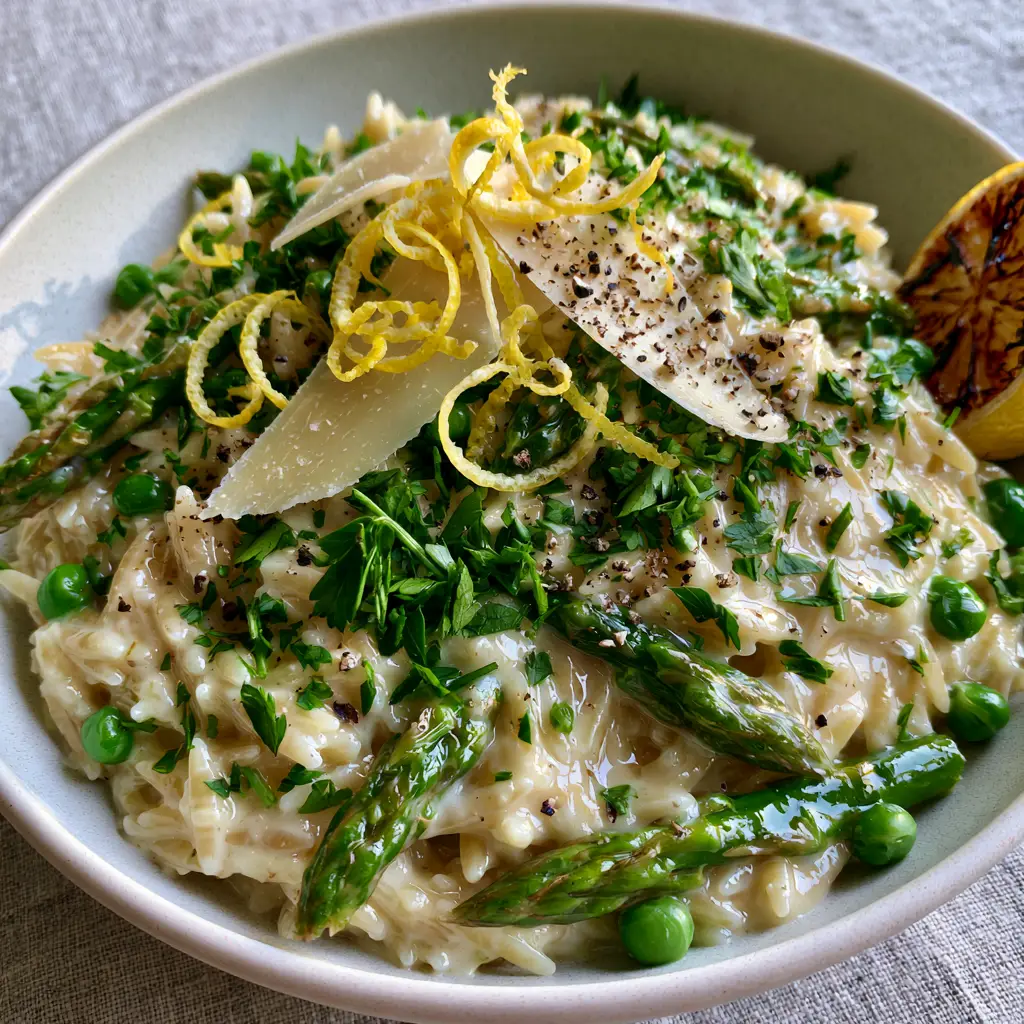
- The Gloss Factor: We achieve a “glossy ivory sauce” by emulsifying starchy pasta water with heavy cream and high-fat European butter.
- Vibrant Greens: By adding the asparagus and peas during the final minutes of cooking, we preserve their “glistening” texture and bright color.
- The Charred Finish: A single charred lemon half provides a smoky acidity that cuts through the richness of the parmesan garlic sauce.
- Textural Contrast: Large, paper-thin shavings of parmesan and delicate lemon zest curls add layers of flavor and visual sophistication.
Essential Ingredients for This Gourmet Pasta
Dried Orzo Pasta: You will need 1.5 cups (300g) of high-quality orzo. This rice-shaped pasta is the foundation, releasing just enough starch to create a natural creaminess as it simmers.
Fresh Asparagus Spears: Use 1 lb (450g) of asparagus, with the woody ends trimmed. We focus on the tender tips and upper stalks to ensure every bite is “tender and slightly glistening.”
Sweet Green Peas: 1 cup (150g) of fresh or frozen sweet peas adds a “plump” pop of sweetness. These provide a beautiful color contrast against the pale ivory sauce.
Heavy Cream & Unsalted Butter: 1/2 cup (120ml) of heavy cream and 2 tbsp (30g) of butter are the “invisible ingredients” required for that professional-grade mouthfeel. They bridge the gap between the broth and the cheese.
Aged Parmesan Cheese: You will need 1 cup (90g) finely grated for the sauce, plus extra for those “large paper-thin shavings” on top. Always grate your own cheese for the smoothest melt.
Aromatics & Seasoning: 3 cloves of minced garlic, 3 cups (720ml) of vegetable broth, fresh parsley, and coarse cracked black pepper provide the savory backbone of the dish.
Fresh Lemons: One lemon is zested for “delicate curls,” while another is halved and charred to provide the finishing citrus punch.
Professional Tools for Culinary Success
To achieve the visual result of a “shallow matte white ceramic bowl” filled with perfection, you’ll need a wide, deep skillet or a Dutch oven. This allows the orzo to cook evenly in a single layer. A microplane is essential for creating the lemon zest curls, while a vegetable peeler is the secret tool for those wide parmesan shavings. Finally, a cast iron pan or a very hot non-stick skillet is needed to get that perfect char on the lemon wedge.
How to Make the Creamiest Asparagus Peas Orzo
1. Searing the Aromatics and Toasting the Orzo
Heat the butter in your skillet over medium heat until it begins to foam. Add the minced garlic and sauté for 60 seconds until fragrant but not browned. Add the dry orzo to the pan, stirring constantly for 2 minutes. This “toasting” step adds a nutty depth to the pasta and prevents it from becoming mushy as it absorbs the liquid.
2. The Slow-Simmer Technique
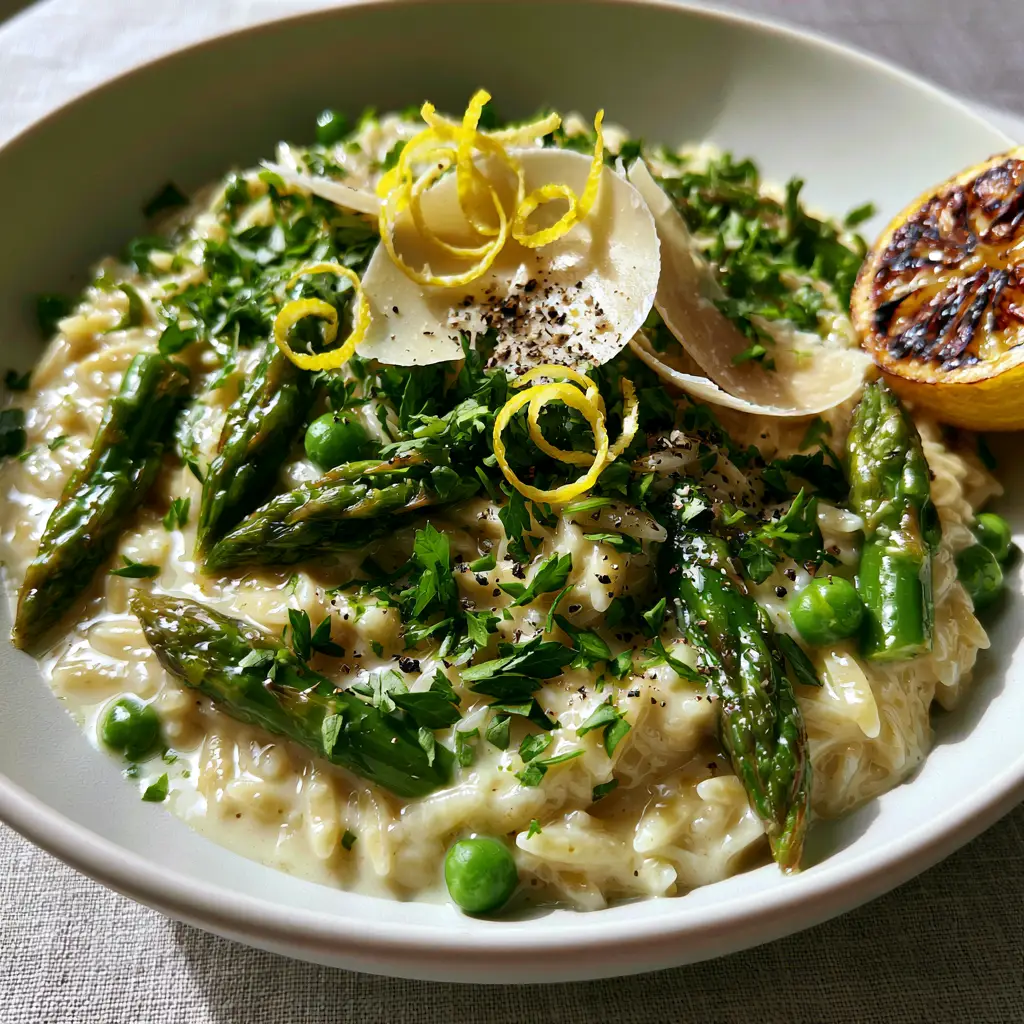
Pour in the vegetable broth and a pinch of salt. Bring the mixture to a gentle simmer, then reduce the heat to medium-low. Stir frequently—this movement encourages the orzo to release its starch, which is the key to a “thick, glossy” sauce. Continue cooking for about 8–10 minutes, or until the liquid is mostly absorbed and the orzo is al dente.
3. Incorporating the Vibrant Spring Vegetables
When the orzo is nearly finished, fold in the asparagus spears and sweet green peas. Add the heavy cream at this stage as well. The heat from the pasta will steam the vegetables to a “vibrant green” state in just 3-4 minutes. You are looking for a “tender and slightly glistening” appearance, not a soft or dull texture.
4. Emulsifying the Parmesan Garlic Sauce
Remove the pan from the heat. Stir in the finely grated parmesan cheese and the lemon zest. The cheese should melt instantly into the cream and pasta starch, creating that “pale ivory” coating. If the sauce is too thick, add a tablespoon of broth until it reaches a glossy, pourable consistency.
5. Achieving the Perfect Charred Lemon
While the pasta rests, place a lemon half cut-side down in a hot, dry skillet. Sear it for 3-4 minutes without moving it until the surface is deeply caramelized and nearly black. This “charred lemon wedge” isn’t just a garnish; the heat softens the juice and adds a smoky dimension to the final dish.
Expert Tips for Recipe Perfection
- Don’t Overcook the Veggies: The asparagus should still have a slight “snap” to it. If you overcook them, they will lose their vibrant green color and turn olive-drab.
- The Starch Secret: If you find your orzo is sticking, add liquid in small increments, similar to making a risotto. This ensures a velvety finish.
- Cold Cheese Rule: Use room temperature parmesan for the sauce to prevent clumping, but use cold parmesan for the “paper-thin shavings” so they hold their shape.
- Season Aggressively: Orzo and peas are naturally sweet; don’t be afraid of the “coarse cracked black pepper” to balance the flavors.
What to Serve with Creamy Orzo
This Asparagus Peas Orzo is a complete vegetarian meal on its own, but it also pairs beautifully with a light protein like grilled salmon or roasted chicken. If you are looking to create a full Mediterranean spread, consider starting with a lemon arugula pasta salad for some peppery contrast. For those who love a variety of textures, serving this alongside a balsamic orzo salad can showcase the versatility of this pasta shape. If you’re hosting a summer gathering, a side of grilled corn orzo salad adds a smoky sweetness that complements the charred lemon perfectly.
Storage, Reheating, and Freezing
To Store: Keep leftovers in an airtight container in the refrigerator for up to 3 days. Note that the orzo will continue to absorb the sauce as it sits.
To Reheat: The sauce will thicken significantly when cold. To restore the “glossy ivory” texture, reheat on the stove over low heat, adding a splash of broth or milk to loosen the sauce. Stir gently until creamy again.
Freezing: I do not recommend freezing this dish. The delicate cream sauce and the “tender asparagus” do not retain their structural integrity well after being frozen and thawed.
Frequently Asked Questions
Orzo is best served immediately. If you must make it ahead, undercook the pasta slightly and store the sauce separately. Recombine on the stove with extra broth just before serving to maintain the glossy texture.
While frozen peas work beautifully, I highly recommend using fresh asparagus. Frozen asparagus tends to become mushy when cooked, making it difficult to achieve the ‘tender and slightly glistening’ texture required for this dish.
Toasting the dry orzo in butter before adding liquid is the best way to prevent gumminess. Additionally, ensure you are using a 2:1 liquid-to-pasta ratio and stirring frequently to create a sauce rather than a sticky mass.
You can use a high-quality vegan parmesan and full-fat coconut milk or a plant-based heavy cream. Be sure to add a teaspoon of nutritional yeast to replicate the deep umami flavor of the aged cheese.
Charring the lemon caramelizes its natural sugars and softens the acidity. When squeezed over the Asparagus Peas Orzo, it provides a complex, smoky citrus flavor that balances the richness of the heavy cream.
The Ultimate Asparagus Peas Orzo Recipe
Asparagus Peas Orzo: A Creamy Lemon Parmesan One-Pot Masterpiece
Ingredients
Equipment
Method
- Melt butter in a large skillet over medium heat. Add garlic and sauté for 1 minute until fragrant. Add dry orzo and toast for 2 minutes, stirring often.
- Pour in vegetable broth. Simmer for 8-10 minutes, stirring occasionally, until orzo is al dente and most liquid is absorbed.
- Stir in heavy cream, asparagus, and peas. Cook for 3-4 minutes until vegetables are vibrant green and tender.
- Remove from heat. Stir in grated parmesan and lemon zest until a glossy ivory sauce forms.
- Place a lemon half face-down in a hot dry pan for 3 minutes until blackened and caramelized.
- Bowl the orzo and top with shaved parmesan, parsley, cracked pepper, and the charred lemon.
Notes
If the sauce thickens too much while sitting, add a splash of warm broth to restore the gloss.
Closing & Call to Action
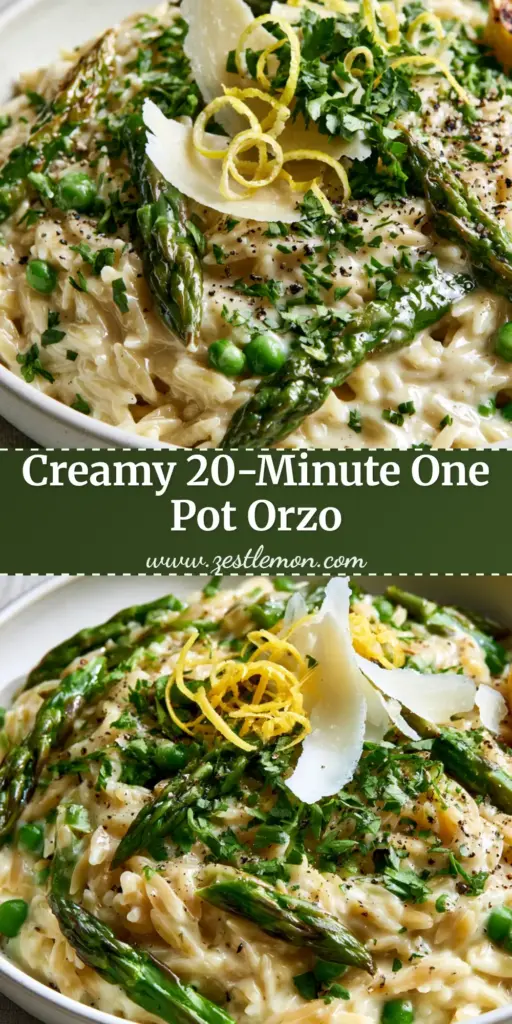
There is nothing quite like a bowl of Asparagus Peas Orzo to celebrate the arrival of spring or to brighten up a cozy evening. The combination of the thick parmesan garlic sauce and the bright citrus notes creates a dining experience that is both elegant and approachable. If you enjoyed this recipe, please leave a comment below and let us know how your charred lemon turned out! Don’t forget to follow us on Pinterest for more gourmet inspiration and share your creations using #ZestLemon.