There is a specific kind of culinary magic that happens when high-quality olive oil meets fresh citrus and heat. This lemon arugula pasta salad isn’t just a side dish; it is a masterclass in texture and brightness. From the peppery snap of the baby arugula to the “glistening” translucent lemon-olive oil emulsion, every bite is designed to feel like a sun-drenched afternoon in the Mediterranean.
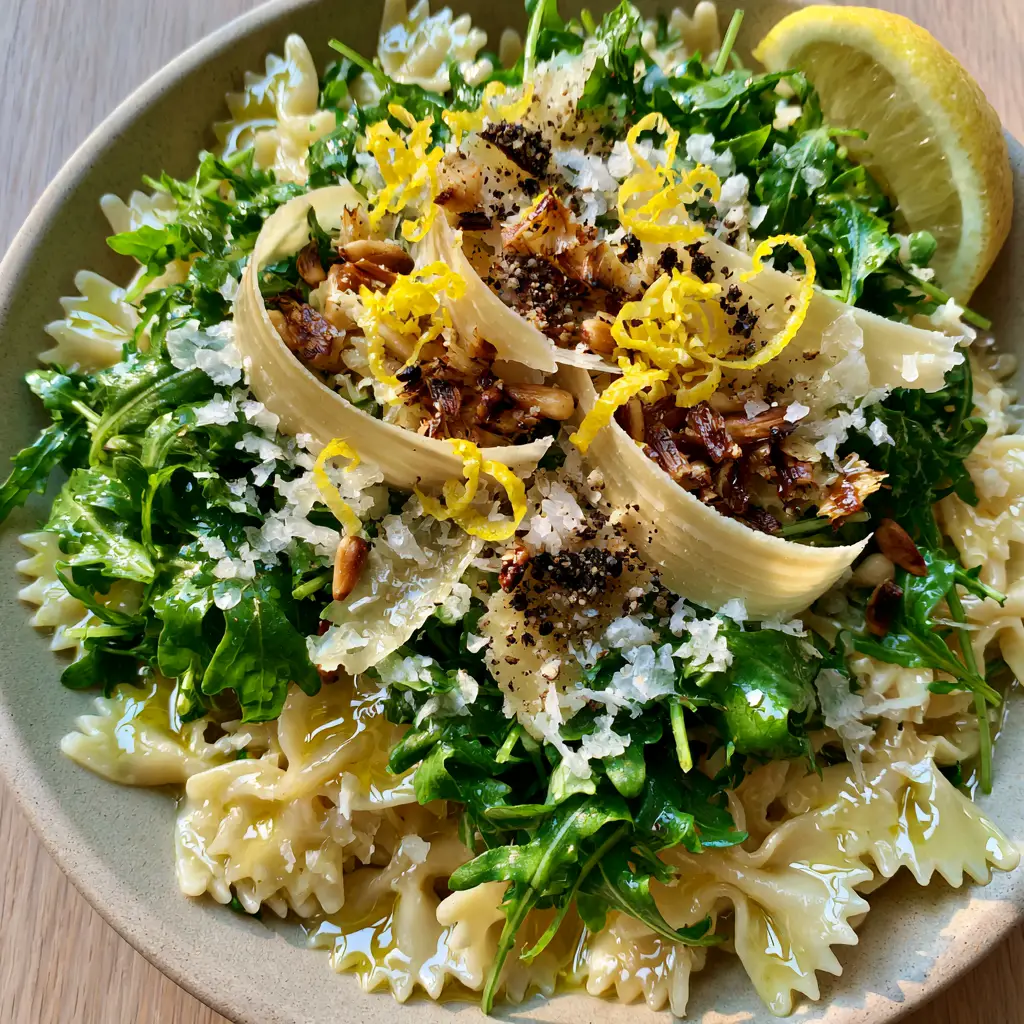
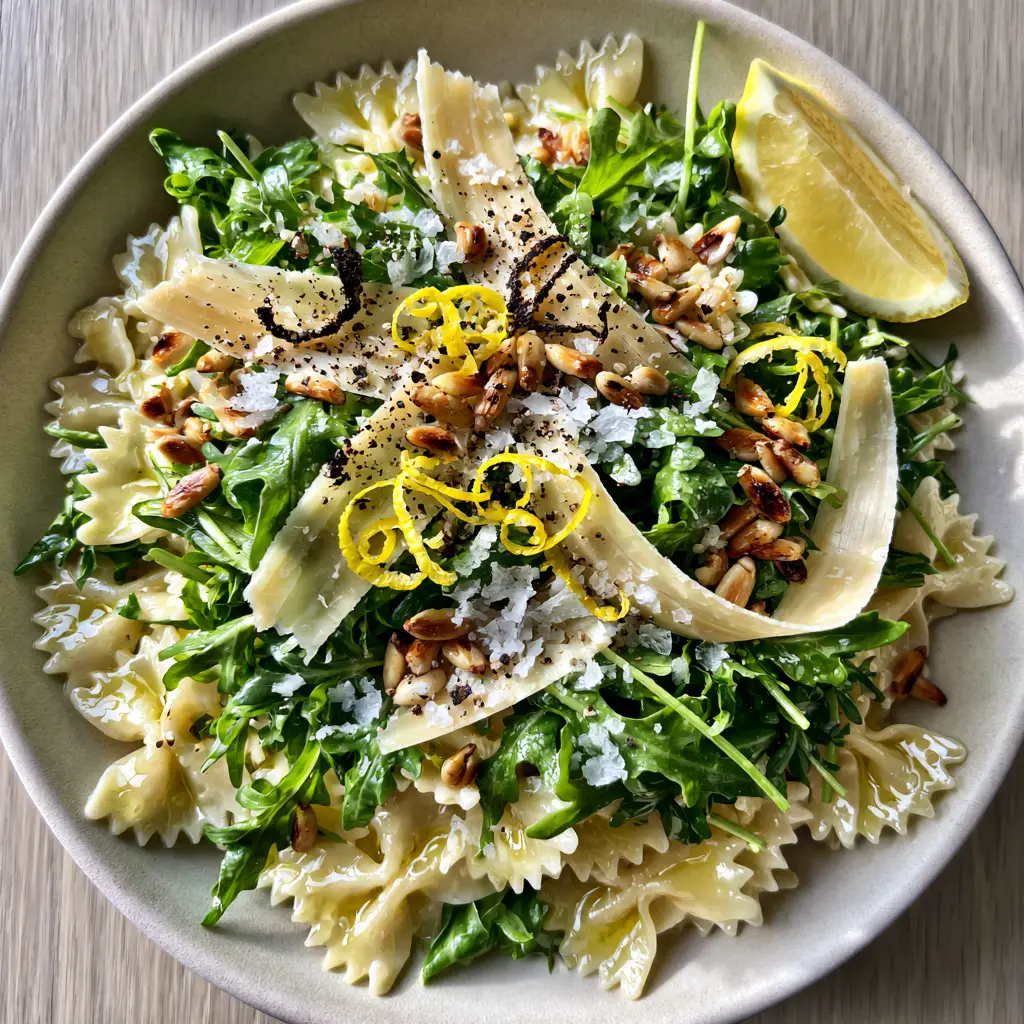
Visually, this dish is a showstopper. Imagine al dente farfalle pasta cradled in a matte stone bowl, topped with wide, translucent ribbons of aged parmesan and golden-brown pine nuts. The addition of delicate lemon zest curls and a final dusting of flaky sea salt creates a dewy, high-definition finish that looks as incredible as it tastes. Whether you are hosting a garden party or looking for a sophisticated desk lunch, this recipe delivers professional results with minimal effort.
The Gourmet Blueprint: Why This Flavor Profile Works
- The Emulsion: Unlike heavy, creamy dressings, this translucent lemon-olive oil emulsion coats the farfalle without weighing it down, creating a dewy sheen that highlights the pasta’s shape.
- The Texture Contrast: You get the bite of al dente “bowtie” pasta, the crunch of toasted pine nuts, and the delicate silkiness of shaved parmesan ribbons.
- Peppery Brightness: Fresh baby arugula provides a natural spice that cuts through the richness of the extra virgin olive oil.
- Visual Finishing Touches: Using lemon zest curls and cracked black pepper ensures the dish looks like a handheld smartphone photo from a high-end food blog.
The Essential Components for a Zesty Masterpiece
To achieve the “gourmet” look and taste described in our visual blueprint, we must select ingredients that offer both structural integrity and vibrant flavor. High-quality fats and acids are the “invisible” foundations of this dish.
The Pasta Base
16 oz (450g) Farfalle Pasta: Also known as bowtie pasta, the “pinch” in the middle creates a perfect textural contrast where the dressing can pool. Ensure you cook this to a strict al dente to maintain the structural integrity required for a dewy, non-mushy salad.
The Liquid Gold Emulsion
1/2 cup (120ml) Extra Virgin Olive Oil: Use the best quality oil you have, as this forms the base of the glistening coating. Look for “cold-pressed” or “early harvest” for a more robust, peppery finish.
1/4 cup (60ml) Freshly Squeezed Lemon Juice: This provides the acidity needed to emulsify with the oil and brighten the starch of the pasta. Never use bottled juice; the enzymatic brightness of fresh lemons is irreplaceable here.
1 tsp (5g) Dijon Mustard: This is a “culinary bridge” ingredient. It acts as a stabilizer to ensure your lemon-olive oil dressing stays translucent and emulsified rather than separating.
The Textural Layers
5 oz (142g) Fresh Baby Arugula: These greens should be vibrant and crisp. They add the “mounds of green” visual element and a necessary peppery bite.
1/2 cup (60g) Pine Nuts: These must be toasted until golden-brown to release their essential oils and provide a buttery crunch. If you prefer a different nut profile, you might enjoy the textures found in my summer orzo pasta salad.
2 oz (56g) Aged Parmesan Cheese: Skip the grated shaker bottle. We need a vegetable peeler to create wide, thin ribbons that look like delicate curls across the bowl.
The Finishing Accents
1 tbsp (6g) Fresh Lemon Zest Curls: Use a channel knife or a careful hand with a peeler to create long, elegant curls of zest. This provides a concentrated citrus aroma before the first bite.
Flaky Sea Salt & Cracked Black Pepper: These aren’t just seasonings; they are visual garnishes. The crystalline flakes of salt and large cracks of pepper catch the light and add “pop” to the final presentation.
Professional Tools for Culinary Precision
Achieving a “hyper-realistic” food photography look at home requires a few specific tools. These ensure the textures match our visual recipe blueprint perfectly.
- Large Stockpot: For boiling the farfalle in highly salted water (the “sea water” rule).
- Cast Iron Skillet: The best tool for achieving an even, golden-brown toast on the pine nuts.
- Vegetable Peeler: Essential for shaving those wide, elegant parmesan ribbons.
- Microplane or Channel Knife: To create the delicate yellow lemon zest curls that sit atop the mounds of arugula.
- Whisk or Small Mason Jar: To create the glistening, translucent lemon-olive oil emulsion through vigorous agitation.
Step-by-Step Orchestration of the Lemon Arugula Pasta Salad
1. Mastering the Al Dente Farfalle
Bring a large pot of water to a rolling boil and salt it generously (at least 2 tablespoons). Add the 16 oz (450g) farfalle and cook for 1-2 minutes less than the package directions. You are looking for a firm “snap” when you bite into the center; this ensures the pasta doesn’t fall apart when tossed with the dressing.
2. The Golden Toasting Technique
While the pasta cooks, place your 1/2 cup (60g) pine nuts in a dry skillet over medium-low heat. Stir constantly for 3-5 minutes. Watch for the visual cue: they should transition from pale cream to a rich, toasted golden-brown. Remove them from the pan immediately once they smell nutty to prevent burning.
3. Crafting the Glistening Emulsion
In a small bowl, whisk together the 1/2 cup (120ml) olive oil, 1/4 cup (60ml) lemon juice, Dijon mustard, and a pinch of salt. Whisk until the mixture is translucent but thick enough to coat the back of a spoon. This is the “dewy texture” seen in the midjourney prompt. If you enjoy dressings with a bit more sweetness, you might compare this to the base of my balsamic orzo salad.
4. The Tempering and Tossing Process
Drain the pasta but do not rinse it; the residual starch helps the emulsion cling to the farfalle. Transfer the warm pasta to a large bowl and pour half of the dressing over it. Let it sit for 5 minutes. This allows the pasta to absorb the lemon flavor without wilting the greens we will add later.
5. Final Assembly for Visual Impact
Once the pasta is room temperature, fold in the 5 oz (142g) baby arugula and the remaining dressing. Add the toasted pine nuts and half of the shaved parmesan ribbons. Gently toss until everything has a “glistening” sheen. If you’re a fan of loaded bowls, you’ll find similar assembly techniques in our traditional Italian pasta salad.
Expert Tips for a Picture-Perfect Result
- The Temperature Guard: Never add the arugula to hot pasta. Wait until the farfalle is barely warm to the touch to ensure the leaves stay “bright, crisp, and vibrant” rather than slimy.
- The “Gloss” Factor: If the pasta looks dry before serving, drizzle an extra tablespoon of high-quality olive oil and give it one final toss to restore that translucent glow.
- Acid Balance: If your lemons are particularly tart, add a half-teaspoon of honey to the dressing. It won’t make it sweet, but it will round out the sharp edges of the citrus.
- Parmesan Prep: Shave the cheese directly over the bowl at the very end. This prevents the ribbons from breaking and keeps them looking like elegant “ribbons.”
Storage and Make-Ahead Advice
This lemon arugula pasta salad is best served within 2 hours of assembly to maintain the crispness of the arugula. However, you can prep the components in advance to save time.
To Prep Ahead: Cook the pasta, toast the pine nuts, and whisk the dressing. Store them in separate containers in the refrigerator. Assemble just before serving to ensure the “dewy” look of the greens is preserved.
Leftovers: If you have leftovers, the arugula will soften overnight. It will still taste delicious, but it will lose the “vibrant green” look. To refresh it the next day, add a handful of fresh arugula and a squeeze of lemon wedge.
What to Pair with Your Lemon Arugula Pasta Salad
This light, citrusy dish pairs beautifully with protein-heavy sides or other garden-fresh salads. For a complete summer spread, consider serving it alongside a spicy corn slaw for a bit of heat or a chilled cucumber punch to keep things refreshing.
If you are hosting a larger gathering, this salad acts as a wonderful acidic counterbalance to richer dishes like a creamy pasta salad or a savory bacon ranch pasta salad.
Commonly Asked Questions
You can prep the pasta and dressing 24 hours ahead, but do not combine them with the arugula and pine nuts until serving. This keeps the greens crisp and the nuts crunchy.
The key is temperature. Ensure the farfalle pasta has cooled to room temperature before folding in the baby arugula. Adding greens to hot pasta will cause them to steam and become slimy.
Toasted slivered almonds or walnuts make excellent substitutes. They provide a similar crunch, though pine nuts offer a unique buttery flavor that defines this specific recipe profile.
Use a standard Y-shaped or swivel vegetable peeler. Firmly pull the peeler across a block of aged parmesan to create wide, translucent strips that add a gourmet look to the salad.
To achieve a stable, translucent emulsion, ensure you include a teaspoon of Dijon mustard. The mustard acts as an emulsifier, binding the oil and lemon juice together for a ‘glistening’ finish.
The Ultimate Lemon Arugula Pasta Salad Recipe
Lemon Arugula Pasta Salad with Shaved Parmesan and Toasted Pine Nuts
Ingredients
Equipment
Method
- Cook farfalle in a large pot of salted water until al dente. Drain and do not rinse.
- In a dry skillet over medium-low heat, toast pine nuts until golden-brown and fragrant, about 3-5 minutes.
- Whisk together olive oil, lemon juice, and Dijon mustard until a translucent, glistening emulsion forms.
- Toss room-temperature pasta with half the dressing. Fold in arugula, pine nuts, and parmesan ribbons. Garnish with lemon zest curls, sea salt, and black pepper.
Notes
Use a vegetable peeler for the best-looking parmesan ribbons.
Closing & Call to Action
This lemon arugula pasta salad proves that simplicity is the ultimate sophistication. By focusing on the “glistening” lemon-olive oil emulsion and the textural interplay of pine nuts and parmesan, you create a dish that is both a visual masterpiece and a culinary delight. If you enjoyed this recipe, please leave a comment below and let us know how yours turned out!
Don’t forget to follow us and save this recipe to your boards on Pinterest for your next summer gathering. Happy cooking!