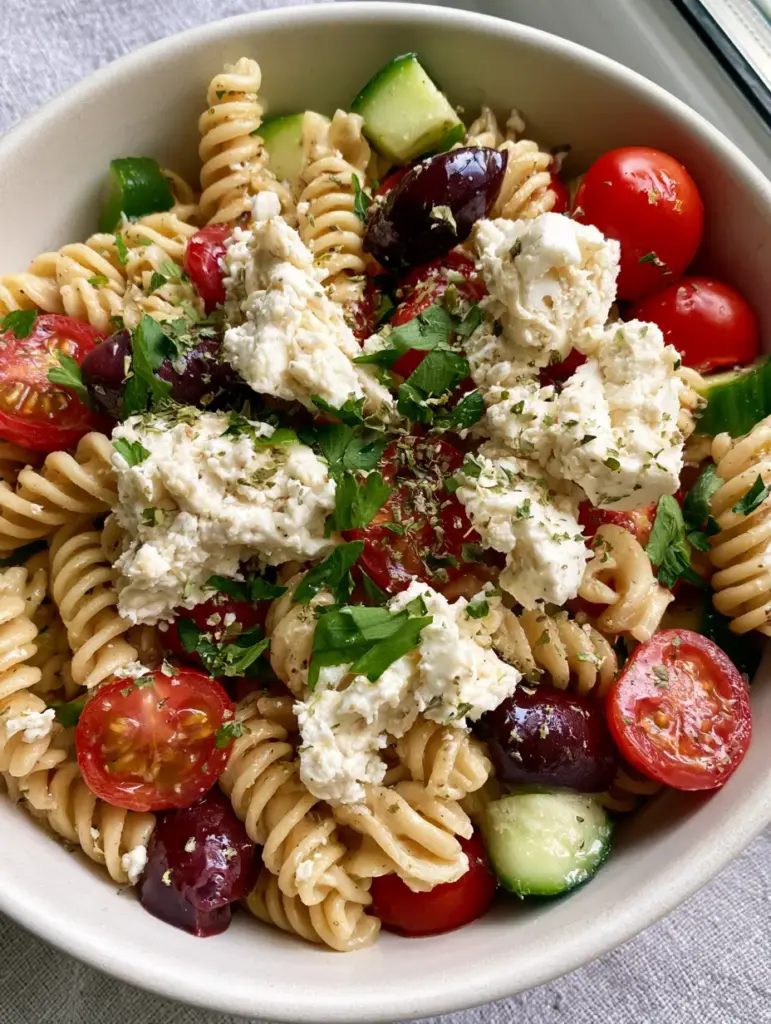
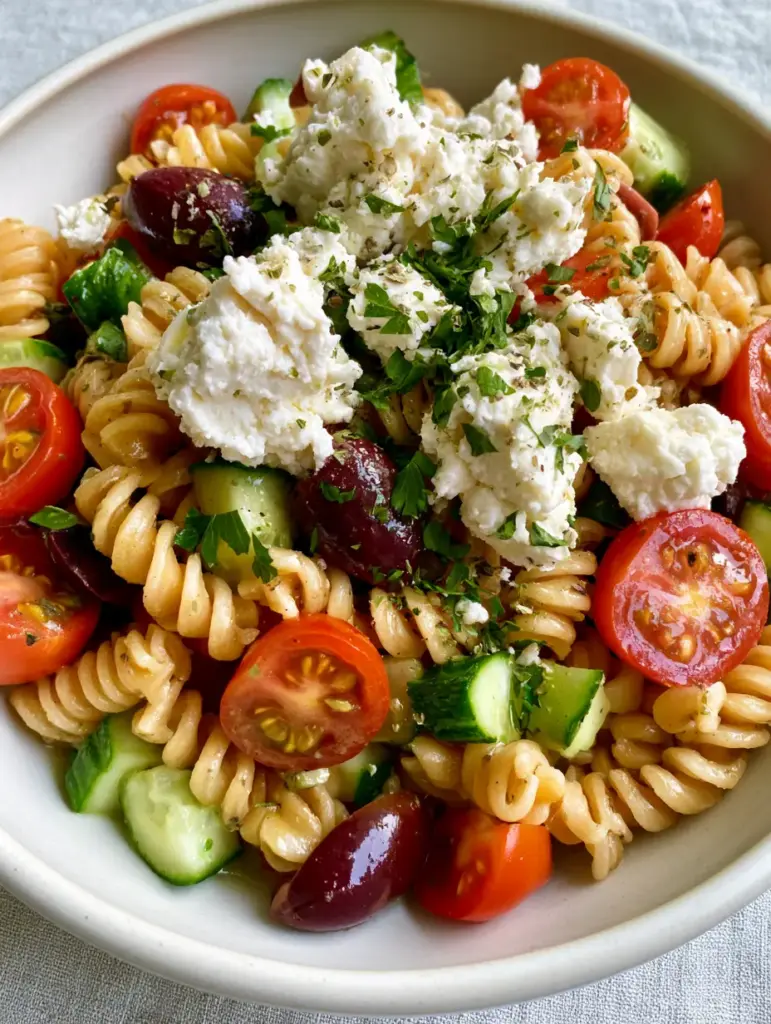
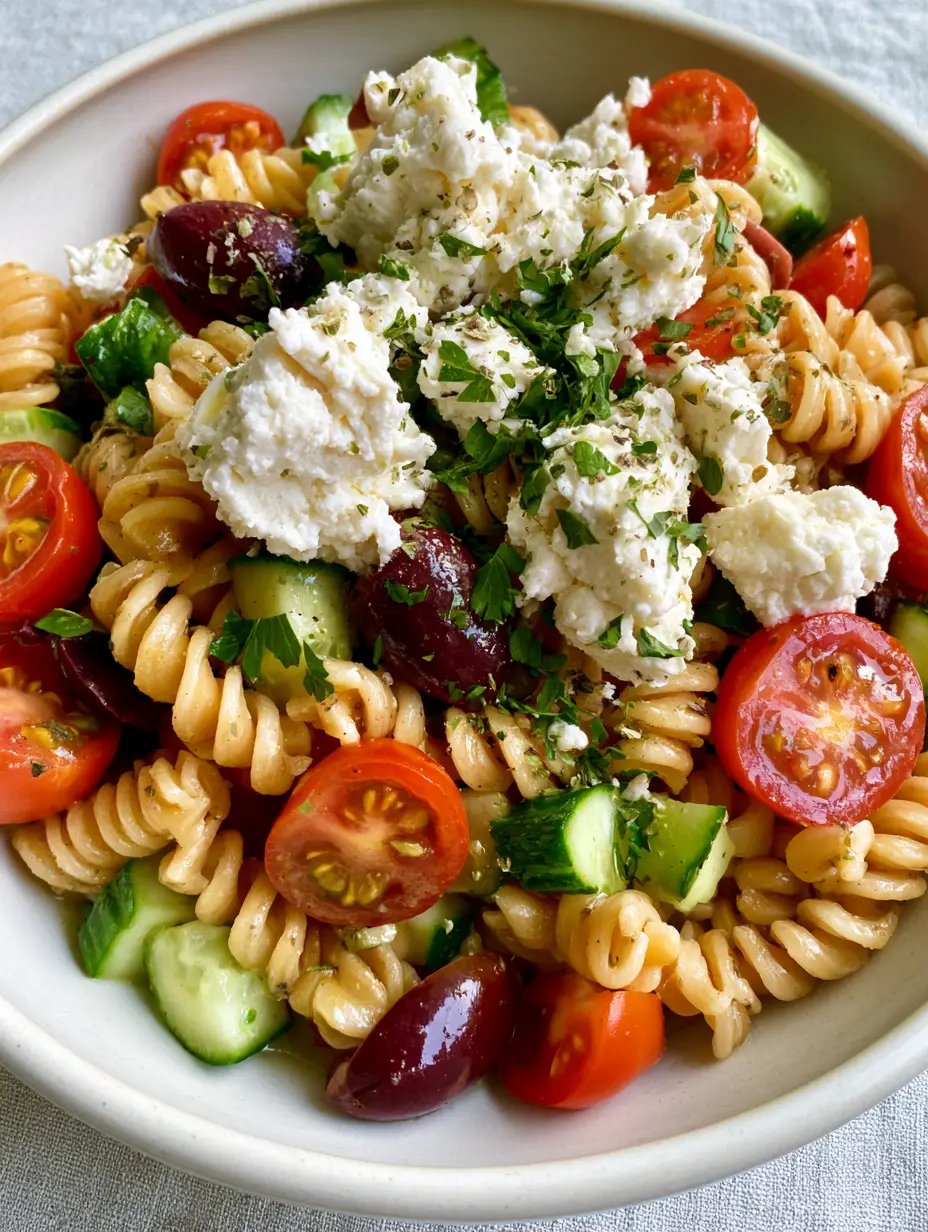
There is nothing quite like the visual allure of a perfectly composed Vegan Greek Pasta Salad. Imagine a shallow, matte white artisanal ceramic bowl, catching the soft, bright natural daylight from a nearby window, illuminating every vibrant component. The gluten-free fusilli spirals glisten under a herbaceous lemon-oregano glaze, while chunky crumbles of creamy dairy-free feta provide a striking contrast against the deep purple of pitted Kalamata olives and the fire-engine red of halved cherry tomatoes.
This isn’t just another side dish; it is a masterclass in texture and Mediterranean flavor profiles. By balancing the crisp snap of Persian cucumbers with the velvety richness of vegan cheese, we create a meal that is as satisfying as it is beautiful. Whether you are hosting a summer garden party or seeking a reliable meal-prep option, this recipe delivers professional results with home-cook accessibility.
Why This Vibrant Mediterranean Bowl Stands Out
- Textural Harmony: We pair al dente gluten-free fusilli with the specific crunch of quarter-sliced Persian cucumbers to ensure every bite has structural integrity.
- Visual Brilliance: The contrast between the vibrant green cucumber skins, bright red tomatoes, and dark purple olives creates a “macro-ready” aesthetic perfect for your next gathering.
- Scientific Flavor Layering: We use a dual-action oregano approach—using both fresh parsley and dried oregano flakes—to provide high-note freshness and earthy depth.
- Creamy Innovation: By using large, chunky crumbles of high-quality vegan feta, we mimic the moist, soft texture of traditional sheep’s milk cheese without the dairy.
The Vibrant Components of Your Vegan Greek Pasta Salad
Gluten-Free Fusilli Pasta: 12 oz (340g). We recommend a brown rice or corn-based blend to maintain that “glistening” spiral shape without the pasta becoming grainy or falling apart after chilling.
Persian Cucumbers: 3 medium (approx. 250g). These are essential for their thin, vibrant green skin and lack of large seeds, providing a concentrated “crisp” factor that larger cucumbers lack.
Ripe Cherry Tomatoes: 1.5 cups (225g). Halving these releases just enough juice to mingle with the vinaigrette while maintaining their “juicy, bright red” visual appeal in the bowl.
Pitted Kalamata Olives: 1/2 cup (75g). These plump, dark purple gems provide the essential briny umami that anchors the lighter, zesty notes of the lemon.
Vegan Feta Cheese: 7 oz (200g). Look for a block variety that can be broken into “large, chunky crumbles” to ensure the soft, moist texture described in our visual blueprint.
Red Onion: 1/4 large onion (approx. 40g). Shaving these into paper-thin slivers ensures the pungent bite is distributed evenly without overpowering the delicate herbs.
Extra Virgin Olive Oil: 1/3 cup (80ml). This forms the base of our glaze; use a high-quality oil to achieve that signature “glistening” look on the pasta spirals.
Fresh Lemon Juice: 3 tbsp (45ml). The acidity here is non-negotiable, acting as the bright highlight that cuts through the richness of the vegan feta.
Dried Oregano & Fresh Parsley: 1 tsp (5ml) and 1/4 cup (15g) respectively. This combination provides the “herbaceous” aromatic profile that defines traditional Greek cuisine.
Sea Salt & Black Pepper: 1/2 tsp (2.5ml) each. Foundational seasonings that sharpen the flavors of the fresh vegetables.
Dijon Mustard: 1 tsp (5ml). An “invisible” culinary necessity that acts as an emulsifier, ensuring your vinaigrette stays as a smooth glaze rather than separating.
The Tools for Culinary Success
To achieve the professional look of this Vegan Greek Pasta Salad, you will need a large pot for boiling the pasta and a colander for immediate rinsing. A sharp mandoline or chef’s knife is required to get those “thinly shaved” red onion slivers that look so elegant in the bowl. You will also need a small glass jar or whisk for emulsifying the dressing to that perfect glistening consistency.
Finally, for the presentation, a shallow matte white ceramic bowl is highly recommended. The matte finish prevents harsh glares from natural daylight, allowing the gentle highlights on the vegetables to shine through in your final presentation.
Steps to Achieving the Perfect Pasta Glaze
1. Precision Pasta Boiling
Bring a large pot of heavily salted water to a rolling boil. Add your gluten-free fusilli and cook for exactly one minute less than the package directions indicate. This “al dente” state is crucial; the pasta will continue to soften slightly as it absorbs the vinaigrette. Once cooked, drain and rinse immediately with cold water to stop the cooking process and remove excess starch.
2. The Emulsified Lemon-Herb Vinaigrette
In a small bowl or jar, combine the extra virgin olive oil, fresh lemon juice, Dijon mustard, and half of the dried oregano. Whisk vigorously until the mixture thickens and becomes a cohesive, pale yellow glaze. This emulsion is what gives the pasta its “glistening” appearance without making the dish feel oily.
3. Vegetable Preparation & Assembly
Slice your Persian cucumbers into quarters lengthwise, then chop them into 1/2-inch pieces to maintain their “crisp” texture. Halve the cherry tomatoes and shave the red onions into translucent slivers. In a large mixing bowl, toss the chilled pasta with two-thirds of the dressing until every spiral is coated. Gently fold in the tomatoes, cucumbers, olives, and onions.
4. The Final Artisanal Flourish
Transfer the mixture to your artisanal ceramic bowl. Now, add the large chunks of vegan feta, being careful not to over-mix, which could turn the cheese into a paste. Scatter the finely chopped fresh parsley and the remaining dried oregano flakes over the top. This “scattered” garnish provides the macro-level detail that makes the dish pop.
Expert Tips for the Ultimate Texture
- Rinse the Pasta: Unlike warm pasta dishes, a cold Vegan Greek Pasta Salad requires rinsing the gluten-free noodles. This prevents them from sticking together and ensures the dressing coats each spiral individually.
- The Feta Factor: Always crumble the vegan feta by hand just before serving. This maintains the “soft, moist texture” and prevents the cheese from drying out in the refrigerator.
- Temperature Control: For the best flavor, let the salad sit at room temperature for 15 minutes before eating. Cold temperatures can mute the brightness of the lemon and the floral notes of the olive oil.
- Onion Mellowing: If you find raw red onion too sharp, soak the shaved slivers in ice water for 5 minutes, then pat dry. This retains the “vibrant purple” look while removing the sulfurous bite.
Pairing & Serving Suggestions
This salad is a standout on its own, but it also functions as a versatile base for a larger Mediterranean spread. If you are looking for more variety in your weekly meal plan, consider how this profile compares to our Italian pasta salad or even a refreshing lemon parmesan pasta salad for those who include dairy in their diet.
For a themed dinner party, serve this alongside grilled vegetable skewers or a hearty 3-bean pasta salad for added protein. If you are preparing this for children, it fits perfectly within the category of kids pasta salad due to the fun spiral shapes and familiar, bright colors.
Storage & Meal Prep Logistics
The Vegan Greek Pasta Salad stores exceptionally well, making it a favorite for busy weekdays. Keep it in an airtight container in the refrigerator for up to 4 days. Note that gluten-free pasta can firm up when cold; if the salad feels dry the next day, simply add a teaspoon of water or an extra splash of lemon juice to revive the “glistening” glaze.
We do not recommend freezing this recipe. The high water content in the Persian cucumbers and cherry tomatoes will cause them to lose their “crisp” and “juicy” textures upon thawing, resulting in a soggy salad.
Common Questions About Vegan Pasta Salad
Absolutely! It actually tastes better after 2-4 hours in the fridge. Just add the fresh parsley and extra feta chunks right before serving for the best visual appeal.
Yes, you can substitute regular wheat fusilli. Simply follow the package instructions for al dente and ensure you rinse it with cold water to maintain the salad’s texture.
The secret is to undercook the pasta by one minute and rinse it immediately under cold running water to remove excess starch and stop the cooking process.
Look for a coconut oil-based block feta. These varieties tend to hold their shape as ‘large chunks’ and have a moist, creamy texture that mimics traditional feta.
Persian cucumbers have thinner skins and fewer seeds, which means they stay crisp and don’t release as much water, keeping your salad from becoming soggy.
The Ultimate Vegan Greek Pasta Salad Recipe
Vegan Greek Pasta Salad with Zesty Lemon-Herb Vinaigrette
Ingredients
Equipment
Method
- Boil the gluten-free fusilli in salted water for 8-10 minutes until al dente. Drain and rinse with cold water immediately to stop cooking.
- Whisk olive oil, lemon juice, Dijon mustard, and half the oregano in a small jar until a thick, glistening glaze forms.
- Quarter-slice the cucumbers, halve the cherry tomatoes, and thinly shave the red onion into delicate slivers.
- Toss the pasta with the dressing, then fold in vegetables and olives. Top with large chunky crumbles of vegan feta and fresh parsley.
Notes
Use Persian cucumbers for a superior crunch without the need for peeling.
Closing & Call to Action
Mastering the Vegan Greek Pasta Salad is all about respecting the ingredients and their visual presentation. From the large crumbles of dairy-free feta to the herbaceous lemon glaze, every element works in harmony to create a dish that is as beautiful as a professional photograph. We invite you to try this recipe and experience the vibrant flavors of the Mediterranean in your own kitchen.
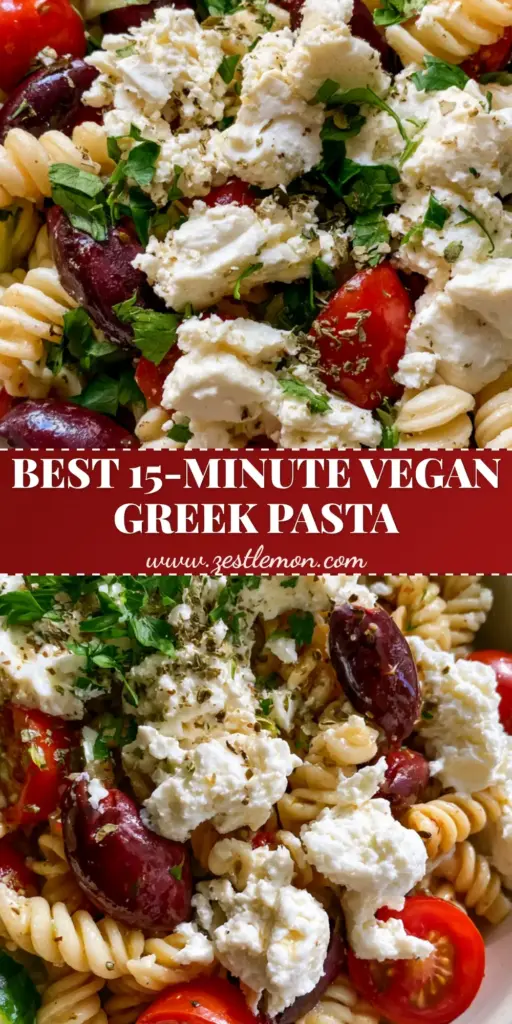
Did you love the “macro” look of this bowl? Let us know in the comments below! Don’t forget to follow ZestLemon_official on Pinterest and share your creations by pinning the image below. Happy cooking!