If you are looking for a show-stopping dish that combines high-end visual appeal with refreshing, earthy flavors, these pink pasta salad cups are your answer. Whether you are hosting a spring brunch, a baby shower, or a sophisticated garden party, these individual servings offer a modern twist on the classic pasta salad.
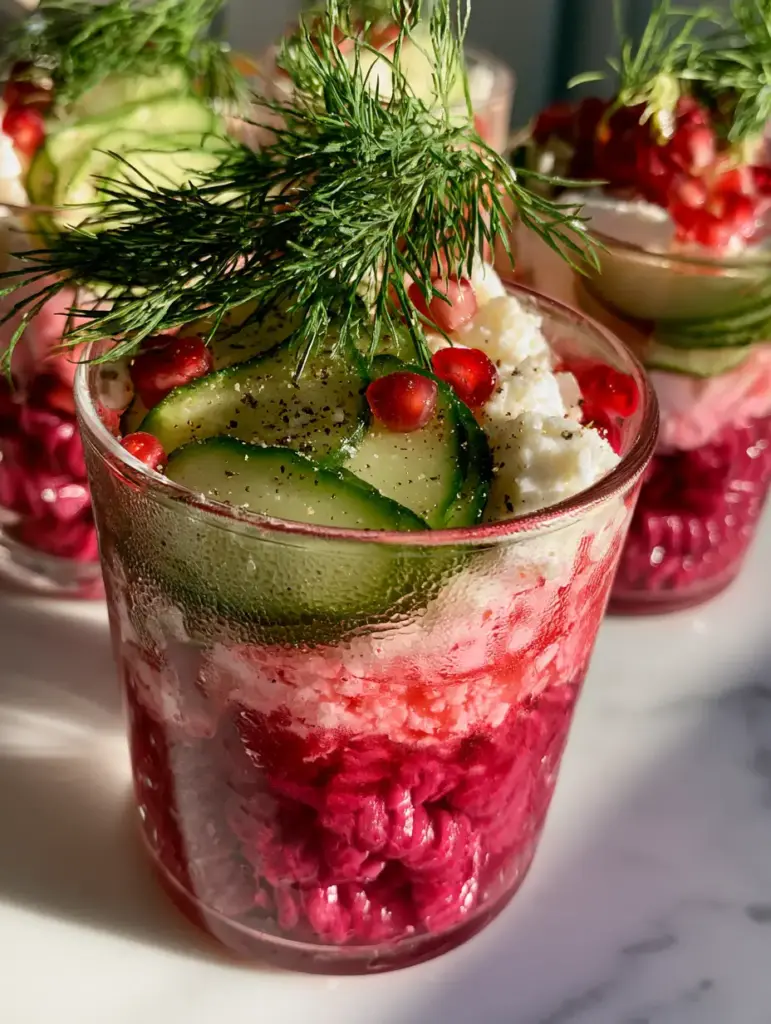
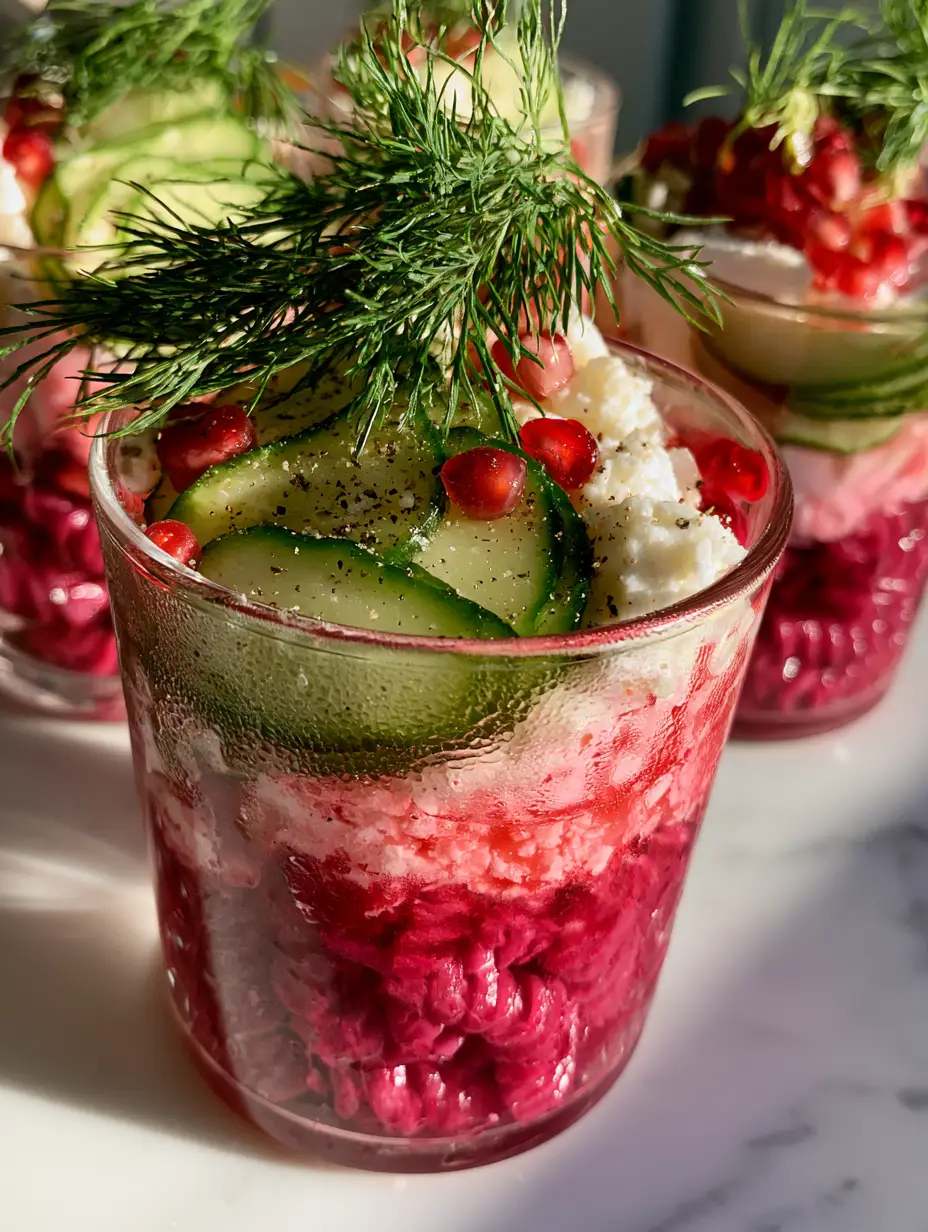
The magic of this recipe lies in its striking magenta hue, achieved entirely through natural ingredients. By using the pigments found in beets to dye al dente rotini, we create a base that is not only visually electric but packed with antioxidants. Arranged in elegant clear glass cups, these salads create a beautiful layered effect that invites guests to dig in.
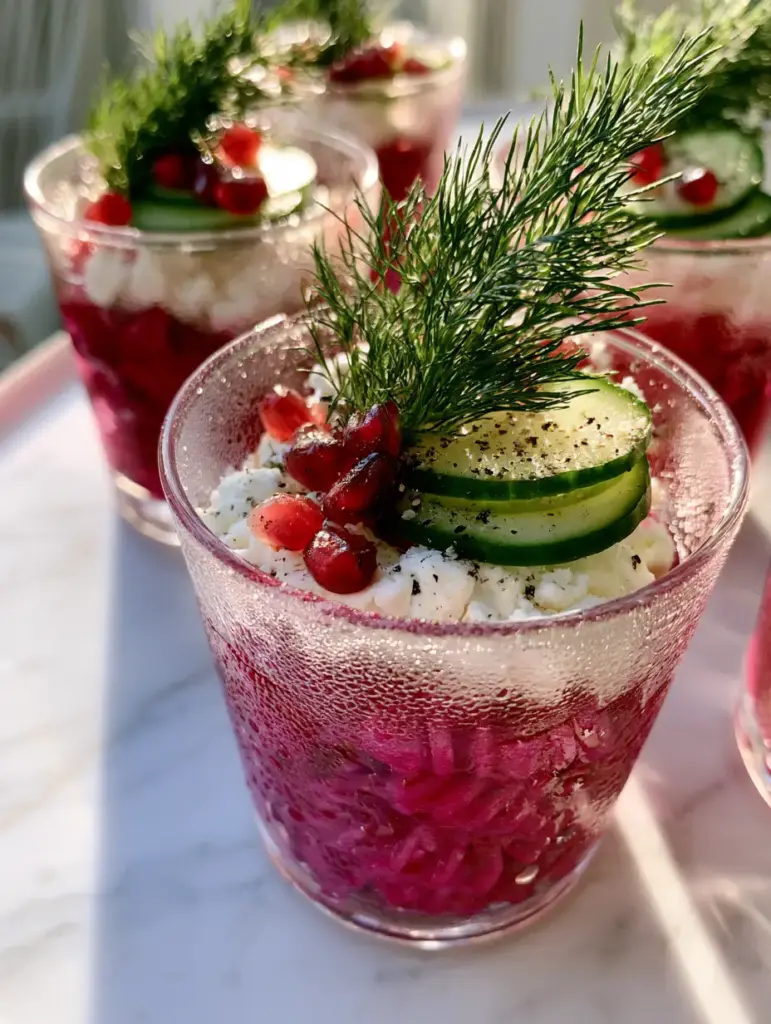
This isn’t just about aesthetics; it’s about the perfect bite. Imagine the contrast of warm morning sunlight hitting a condensation-misted glass, revealing layers of creamy white feta, crisp green Persian cucumbers, and jewel-like pomegranate arils. Each element is tied together with a zesty lemon-herb vinaigrette that cuts through the richness of the cheese.
Why These Magenta Appetizers Are a Total Crowd-Pleaser
- Unrivaled Visual Impact: The deep magenta-purple pasta creates a stunning “wow factor” that stands out on any marble tabletop or buffet spread.
- Perfect Texture Profile: You get the bite of al dente rotini, the crunch of thin Persian cucumbers, and the burst of juicy pomegranate arils in every spoonful.
- Natural & Wholesome: No artificial food colorings are used here; the vibrant pink comes straight from nutrient-dense beet juice.
- Individual Serving Convenience: Serving these in small glass cups ensures portion control and makes them the perfect “handheld” salad for mingling.
The Anatomy of the Perfect Pink Pasta Salad Cups
To achieve the professional results seen in our visual blueprint, you need specific ingredients that offer both structural integrity and flavor balance. We aren’t just tossing things in a bowl; we are building a culinary experience.
The Vibrant Pasta Base
8 oz (225g) Rotini Pasta: The corkscrew shape of rotini is essential because its deep grooves trap the beet dye and the lemon-herb glaze, ensuring every inch is flavorful. Look for a high-quality semolina pasta that maintains its shape without becoming mushy.
2 cups (475ml) Pure Beet Juice: This is the secret to that deep magenta-purple color. Simmering the cooked pasta in beet juice allows the natural betalain pigments to penetrate the outer layer of the wheat, creating a permanent, stunning stain.
The Layered Freshness
1 cup (150g) Crumbled Feta Cheese: The creamy, salty profile of feta provides a necessary counterpoint to the earthy sweetness of the beets. Its bright white color creates the first distinct visual layer above the pink pasta.
2-3 Persian Cucumbers: Persian cucumbers are preferred over English varieties because they have thinner skins and fewer seeds. Slicing them into thin half-moons provides a crisp, refreshing green layer that pops against the magenta and white.
1/2 cup (85g) Pomegranate Arils: These tiny red gems add a sophisticated acidity and a satisfying “pop” texture. They act as the crown of the salad, adding a luxurious finish.
The Flavor Elevators
Fresh Dill Sprigs: Dill provides a feathery texture and a grassy, citrus-like aroma that complements the lemon vinaigrette perfectly. Ensure your dill is vibrant green and not wilting for the best visual effect.
Cracked Black Pepper: A final dusting of coarse black pepper adds a hint of heat and a professional, “finished” look to the top of each cup.
Foundational Ingredients You Can’t Skip
While the blueprint focuses on the visible, the science of the dish relies on these invisible helpers. You will need 1 tbsp (15g) Kosher Salt for the pasta water to season the rotini from the inside out. Additionally, 2 tbsp (30ml) Extra Virgin Olive Oil is required to coat the pasta immediately after dyeing to prevent sticking and add that glossy sheen mentioned in the Midjourney prompt.
Essential Equipment for Elegant Execution
To recreate the high-angle, elegant shot from our guide, you will need 8-10 small clear glass appetizer cups (approx. 5-6 oz capacity). The transparency is vital for showing off the layers. A mandoline slicer is highly recommended for getting those Persian cucumbers into perfectly uniform, thin half-moons. Finally, a large stainless steel pot is necessary for the dyeing process, as plastic bowls may be permanently stained by the beet juice.
Step-by-Step Instructions to Mastering the Magenta Glow
1. Boiling the Perfect Foundation
Bring a large pot of heavily salted water to a rolling boil. Add the 8 oz (225g) of rotini and cook until it is slightly *under* al dente—usually about 2 minutes less than the package directions. This is crucial because the pasta will continue to cook slightly during the dyeing phase, and we want to avoid a mushy texture.
2. The Beet-Dyeing Process
Drain the pasta and return the pot to the stove. Pour in the 2 cups (475ml) of beet juice and bring to a low simmer. Add the cooked rotini back into the pot and toss gently for 3-5 minutes. You are looking for a visual cue: the pasta should transform from pale yellow to a natural, deep magenta-purple. Once achieved, drain any excess juice and toss the pasta with 1 tbsp (15ml) of olive oil to add a glossy sheen.
3. Crafting the Lemon-Herb Vinaigrette Glaze
In a small bowl, whisk together 3 tbsp (45ml) lemon juice, 1/4 cup (60ml) extra virgin olive oil, 1 tsp (5g) honey, and a pinch of salt. This glaze will coat the pasta, giving it that “freshly misted” look while providing the acidity needed to balance the earthy beet flavor. Much like our lemon parmesan pasta salad, the acidity here is the backbone of the dish.
4. Assembly and Layering Logic
Allow the pasta to cool to room temperature before assembling to prevent the feta from melting. Place a generous scoop of the pink rotini at the bottom of each glass cup. Follow with a layer of crumbled feta, then a decorative arrangement of thin Persian cucumber half-moons. Sprinkle the pomegranate arils over the top, followed by a light drizzle of the remaining vinaigrette.
5. The Final Garnishing Touches
Just before serving, place a lush sprig of feathery fresh green dill into the top of each cup. Finish with a generous dusting of cracked black pepper. If you are preparing these in advance, refrigerate them for 30 minutes; this creates the light condensation-misted effect on the glass that signifies a chilled, fresh appetizer.
Expert Tips for Visual and Culinary Success
- Prevent Color Bleeding: Make sure the beet-dyed pasta is completely cooled and tossed in oil before adding the feta. This prevents the white cheese from turning pink immediately.
- Maximize The Gloss: If the pasta looks dull after cooling, give it a very light mist of olive oil spray just before serving to restore the sheen.
- Cucumber Crispness: Slice the cucumbers right before assembly. If they sit too long, they lose their rigidity and the “clean” look of the half-moon shape.
- Tweak the Sweetness: If your beet juice is particularly earthy, add an extra teaspoon of honey to the vinaigrette to balance the flavors.
Storage and Preparation Guidelines
These pink pasta salad cups are best enjoyed within 4-6 hours of assembly. While the pasta can be dyed 24 hours in advance and stored in an airtight container, the assembly should happen closer to your event to keep the cucumbers crisp and the feta white. We do not recommend freezing this recipe, as the texture of the cucumbers and pasta will degrade significantly upon thawing.
What to Serve With Your Pink Pasta Salad
These cups are a fantastic starter for a multi-course lunch. They pair beautifully with other textured salads. If you are looking for a more hearty spread, consider serving them alongside our bacon broccoli pasta salad for a salty contrast, or perhaps a vegan Caesar pasta salad for those looking for a creamy, plant-based option. If you’re building a full pasta salad recipes bar, these pink cups will undoubtedly be the centerpiece.
Frequently Asked Questions
Yes! Simply swap the feta cheese for a vegan feta alternative or almond-based ricotta, and ensure you use agave nectar instead of honey in the vinaigrette.
While you can use pink food coloring, beet juice provides a much deeper, more sophisticated magenta hue and adds nutritional value. Beet juice is the best way to achieve the specific visual result shown.
The pasta takes on a very subtle earthy sweetness from the beet juice, but it is not overwhelming. The lemon-herb vinaigrette and salty feta cheese perfectly balance the flavor profile.
A little condensation is a great visual cue for freshness! To control it, chill the assembled cups for only 30-60 minutes before serving rather than keeping them in the fridge overnight.
Rotini or Fusilli are best because their twists and spirals have a high surface area, which helps them absorb the beet dye evenly and hold onto the dressing.
The Official Pink Pasta Salad Cups Recipe Card
Pink Pasta Salad Cups: The Ultimate Vibrant Beet-Dyed Party Appetizer
Ingredients
Equipment
Method
- Cook rotini in salted water until just under al dente. Drain.
- Simmer the cooked pasta in 2 cups (475ml) of beet juice for 3-5 minutes until deep magenta. Drain and toss with a little olive oil for sheen.
- Whisk lemon juice, olive oil, and honey together to create the vinaigrette glaze.
- Place pink pasta in the bottom of glass cups. Layer with crumbled feta, cucumber slices, and pomegranate arils.
- Drizzle with glaze and garnish with a fresh dill sprig and cracked black pepper.
Notes
Use high-quality beet juice for the most vibrant magenta result.
Share the Magenta Magic!
These pink pasta salad cups are more than just a side dish; they are a conversation starter. The vibrant colors and fresh, zesty flavors make them a must-try for any home cook looking to impress. If you make this recipe, we would love to see your results! Leave a comment below and tell us how your guests reacted to the stunning magenta hue.
Don’t forget to save this recipe to your “Party Appetizers” board on Pinterest so you can find it for your next big event! Happy cooking!