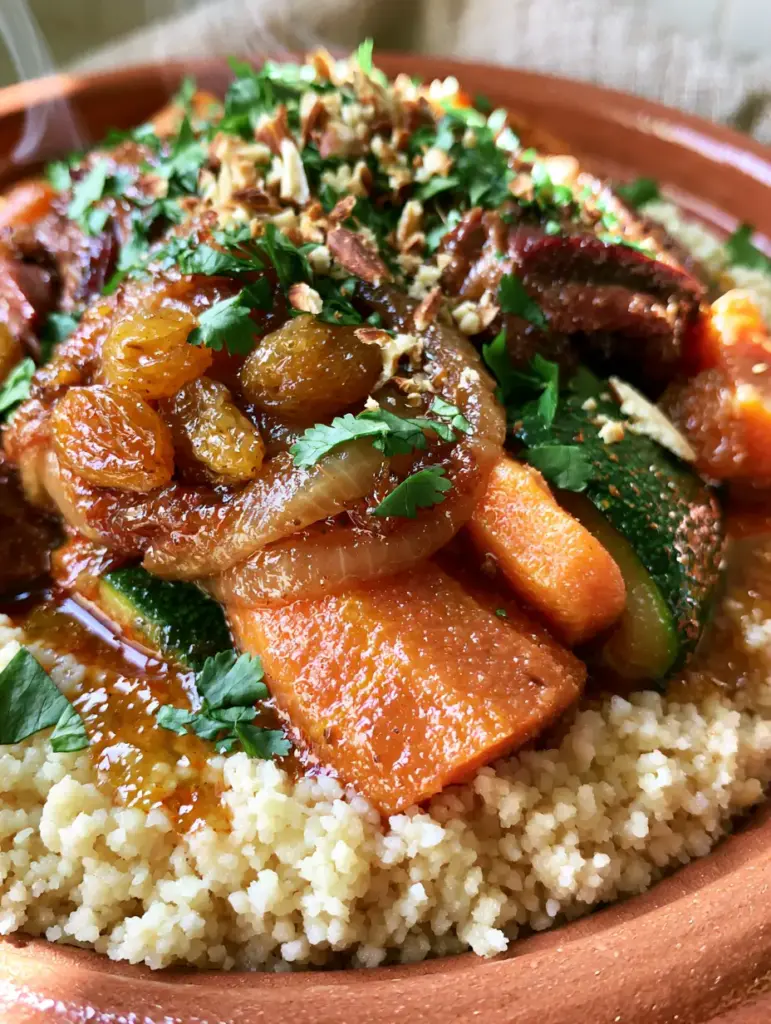
There is nothing quite like the sight of a traditional terracotta bowl overflowing with authentic Moroccan couscous. The way the light, airy semolina grains catch the steam, rising in translucent plumes, tells a story of patience and culinary heritage. This isn’t just a meal; it’s a centerpiece of Moroccan hospitality, where every grain is treated with the respect of an artisan craft. Whether you are hosting a festive gathering or seeking the ultimate comfort food, this recipe delivers the perfect balance of savory braised meat and the honeyed sweetness of caramelized onions.
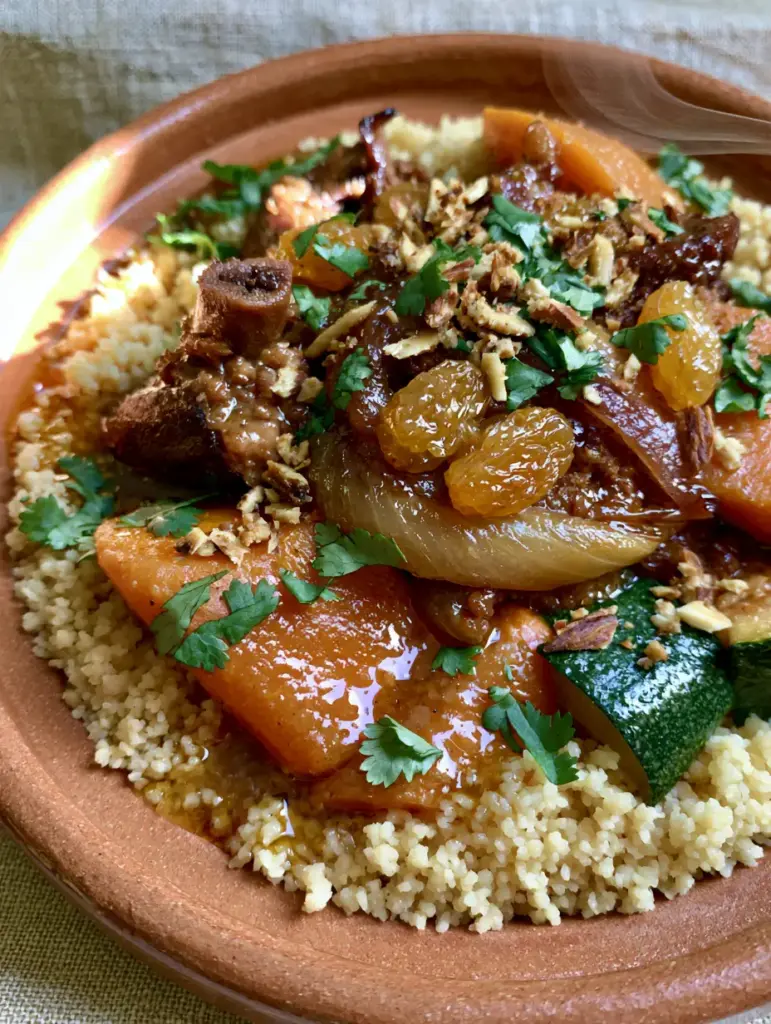
When you look at a professional plate of Moroccan couscous, the first thing you notice is the texture. The grains are individually visible, fluffy, and never clumpy. They serve as a soft bed for tender, falling-apart lamb and a vibrant array of stewed vegetables. The dish is crowned with “Tfaya”—a jammy mixture of caramelized onions and raisins—and finished with a glistening amber broth that ties the earthiness of the pumpkin and zucchini together. Topped with crunchy almonds and fresh cilantro, it is a sensory masterpiece that satisfies every craving.
Why This Authentic Moroccan Couscous Is a Culinary Masterpiece
- The Perfect Texture: Using the traditional three-steam method ensures semolina grains that are light, airy, and capable of absorbing the rich amber broth without becoming mushy.
- Sweet and Savory Balance: The addition of Tfaya (caramelized onions and golden raisins) provides a sophisticated contrast to the deeply savory, spice-rubbed braised lamb.
- Nutrient-Dense Vegetable Medley: Large, soft-stewed chunks of carrots, zucchini, and pumpkin offer a variety of vitamins and textures that make this a complete, wholesome meal.
- Visual Elegance: From the vibrant orange of the pumpkin to the emerald green of the cilantro, this dish is designed to be as beautiful as it is delicious.
Essential Ingredients for the Ultimate Lamb and Semolina Feast
The Foundation: Lamb and Aromatic Broth
2 lbs (900g) Lamb Shoulder or Shanks: Choose bone-in cuts for the most flavorful, collagen-rich amber broth. The fat renders down during the braise, creating that signature glistening finish.
2 tsp (10g) Ground Ginger: This provides a sharp, warm undertone that cuts through the richness of the lamb. It is a staple in traditional Moroccan spice blends.
1 tsp (5g) Ground Turmeric: Beyond its earthy flavor, turmeric is responsible for the beautiful golden hue of the stew and the grains.
1 pinch (0.5g) Saffron Threads: Steeping saffron in a bit of warm water before adding it to the pot unlocks a floral aroma that defines high-end Moroccan couscous.
1 large (150g) Onion, Grated: Grating the onion allows it to melt into the broth, acting as a natural thickener for the savory base.
The Grains: Traditional Semolina
3 cups (500g) Fine or Medium Semolina: While instant versions exist, using raw semolina is necessary for the authentic “airy” texture described in our visual blueprint.
2 tbsp (30ml) Vegetable Oil: Used in the initial rubbing phase to coat each grain and prevent clumping during the first steam.
1 tsp (5g) Salt: Essential for seasoning the grains from the inside out; without it, the semolina will taste flat despite the flavorful broth.
2 tbsp (30g) Unsalted Butter or Smen: This is folded into the hot grains at the very end to provide a silky mouthfeel and a rich, nutty aroma.
The Toppings: Sweet Tfaya and Vibrant Vegetables
3 large (450g) Red or Yellow Onions, Thinly Sliced: These will be slow-cooked until they reach a mahogany, jammy consistency for the Tfaya.
1/2 cup (75g) Golden Raisins: Plumped up in the onion juices, these provide bursts of sweetness that complement the lamb. If you enjoy fruit-forward elements in savory dishes, you might also appreciate our curried chicken salad variations.
3 large (300g) Carrots, Peeled and Halved: Cut into large chunks to withstand the long stewing process without losing their structural integrity.
2 medium (300g) Zucchini, Cut into Thick Rounds: These are added later in the process to ensure they stay tender but hold their shape.
1 cup (250g) Pumpkin or Butternut Squash Chunks: The pumpkin adds a creamy, sweet element to the vegetable layer that is visually striking.
1/4 cup (40g) Slivered Almonds, Toasted: These provide the critical “crunch” factor mentioned in the visual prompt, offering a textural counterpoint to the soft stewed elements.
1/2 bunch (15g) Fresh Cilantro: Roughly chopped and scattered at the end to provide a pop of green and a fresh, herbal finish.
Tools Required for Professional Results
To achieve the “light and airy” grain structure, a Couscoussier (a two-tiered steamer pot) is highly recommended. If you don’t have one, a large stockpot paired with a fine-mesh steamer insert lined with cheesecloth will suffice. You will also need a large, wide bowl (traditionally a “Gassa”) for “working” the grains by hand, which is the secret to removing clumps. A heavy-bottomed Dutch oven is ideal for the lamb braise to ensure even heat distribution and prevent scorching. For more tips on using heavy cookware, check out our guide on mastering the perfect sear.
The Step-by-Step Guide to Mastering Moroccan Couscous
Phase 1: Braising the Lamb and Building the Amber Broth
In the bottom of your steamer pot or Dutch oven, heat a splash of oil over medium-high heat. Sear the lamb chunks until a deep golden-brown crust forms on all sides; this Maillard reaction is the key to a savory, glistening broth. Add the grated onion, ginger, turmeric, salt, pepper, and saffron. Pour in 8 cups (2L) of water or beef stock, bringing it to a boil. Once boiling, reduce the heat to a simmer, cover, and let the lamb braise for about 60 minutes. You are looking for the meat to become tender but not yet falling off the bone.
Phase 2: The Art of Steaming the Semolina
While the lamb simmers, place the dry semolina in a large wide bowl. Drizzle with oil and a splash of water, using your fingertips to rub the grains together. This “raking” motion ensures every grain is coated, preventing clumps. Transfer the grains to the steamer basket. Place the basket over the simmering lamb (ensure no steam escapes from the sides). Steam for 20 minutes. Remove the basket, pour the grains back into the bowl, and gradually work in 1 cup (240ml) of salted water. Let it rest for 10 minutes, then repeat the steaming process twice more. Between the second and third steam, you will notice the grains expanding and becoming incredibly light.
Phase 3: Crafting the Sweet Tfaya and Stewing Vegetables
In a separate skillet, cook the sliced onions with a bit of butter, cinnamon, and sugar over low heat. After 20 minutes, when they are soft and translucent, add the golden raisins. Continue cooking until the mixture is dark, jammy, and fragrant. Meanwhile, add the carrots and pumpkin to the lamb pot. Ten minutes before the lamb is completely tender, add the zucchini. The vegetables should be soft enough to cut with a spoon but still vibrant in color. If you’re a fan of squash-based dishes, you’ll love our crispy zucchini fritters as a side option.
Phase 4: The Final Assembly and Visual Flourish
Add the butter or smen to the hot, steamed couscous and fluff with a fork one last time. Heap the grains into a large terracotta bowl, creating a well in the center. Place the tender lamb in the well and arrange the carrots, zucchini, and pumpkin chunks around the sides. Spoon a generous amount of the amber broth over the top until the grains glisten. Finally, mound the sweet Tfaya on top of the lamb and garnish with toasted almonds and fresh cilantro. The rising steam should carry the scent of saffron and cinnamon to every corner of the room.
Expert Tips for Success
- The Steam Seal: If steam escapes from the joint between the pot and the steamer basket, wrap a damp piece of cloth (a “قفة” or kaffah) around the seal to force all the steam through the grains.
- Don’t Rush the Onions: True Tfaya takes time. If you turn up the heat, the onions will burn rather than caramelize, losing that deep mahogany color.
- Vegetable Timing: Always add carrots first and zucchini last. Zucchini has a high water content and will turn to mush if cooked as long as the lamb or carrots.
- Broth Consistency: If your broth looks too thin, remove the lid during the last 15 minutes of the lamb braising to allow it to reduce into a rich, savory nectar. For more sauce-heavy inspiration, look at our saucy chicken recipes.
How to Store and Reheat Leftovers
Moroccan couscous is even better the next day as the grains continue to absorb the flavors of the broth. Store the grains and the lamb/vegetable mixture in separate airtight containers in the refrigerator for up to 3 days. To reheat, the best method is to re-steam the grains for 10 minutes to restore their fluffiness. Alternatively, microwave with a damp paper towel over the top. The lamb and vegetables can be gently warmed on the stovetop over low heat. Freezing is not recommended for the vegetables as the pumpkin and zucchini will lose their texture.
What to Serve With This Traditional Feast
While this is a complete one-pot meal, it pairs beautifully with a fresh, acidic side to cut through the richness of the lamb. A simple chilled cucumber salad or a mix of tomatoes and herbs provides a refreshing contrast. For a full Mediterranean-inspired spread, consider adding a side of marinated beans or some crispy potatoes if you are feeding a very large crowd. Don’t forget a pot of hot Moroccan mint tea to finish the meal!
Frequently Asked Questions
While instant couscous is faster, it will not achieve the ‘light and airy’ texture of traditionally steamed semolina. For this authentic recipe, raw semolina and the three-steam method are essential.
The secret is rubbing the grains with oil and a little water before the first steam, and again with salted water between steams. This separates the grains and allows them to swell individually.
Yes! You can omit the lamb and use a rich vegetable broth. Increase the variety of vegetables to include chickpeas or sweet potatoes to maintain the dish’s heartiness.
Tfaya is a sweet and savory topping made of caramelized onions and raisins. It is a hallmark of Moroccan cuisine, providing a necessary contrast to the savory lamb broth, though it can be served on the side.
Bone-in lamb shoulder or shanks are best because they release collagen, creating a rich, glistening amber broth. You can also use beef or chicken, though cooking times will vary.
The Ultimate Authentic Moroccan Couscous Recipe
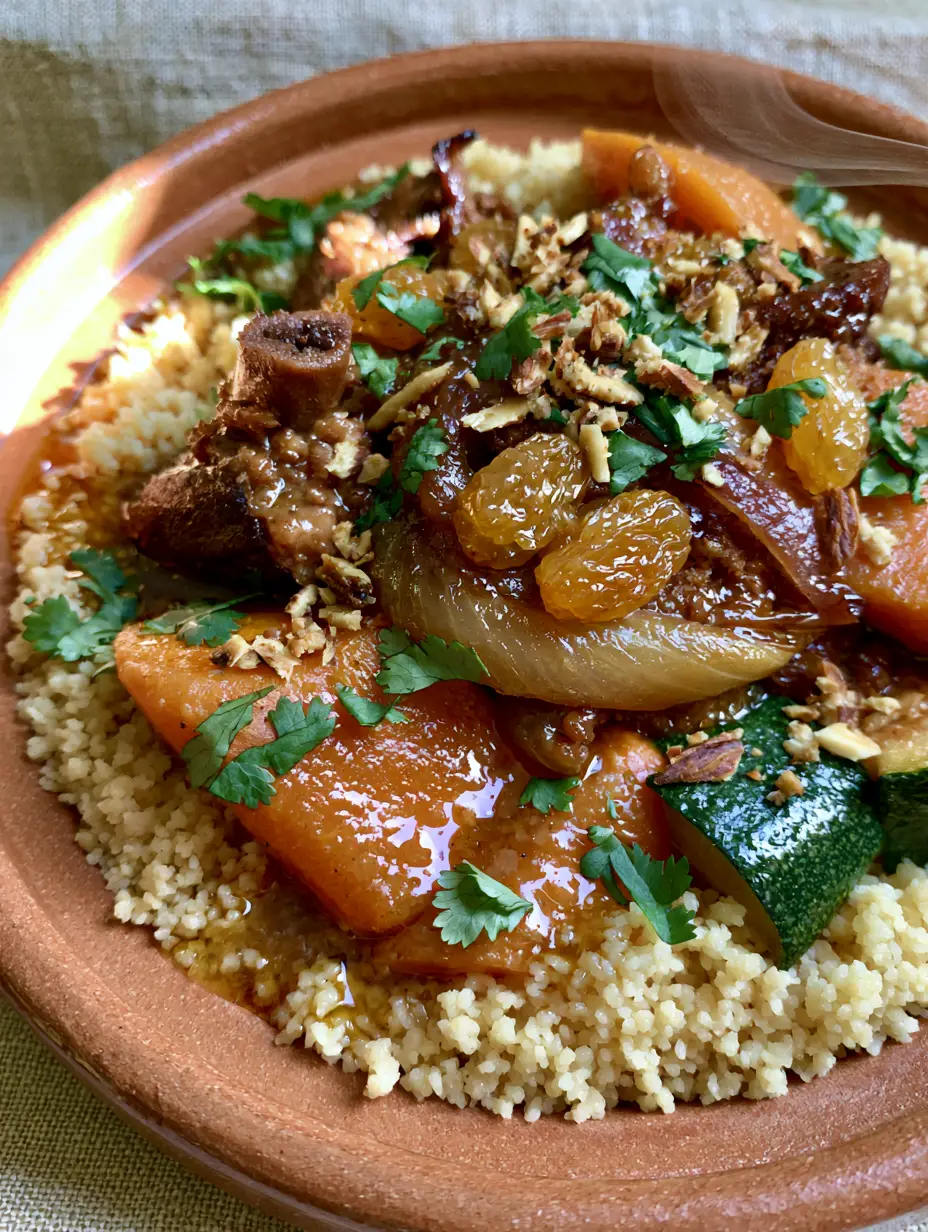
Traditional Moroccan Couscous with Braised Lamb and Sweet Tfaya
Ingredients
Equipment
Method
- Sear lamb in a large pot until browned. Add grated onion, spices, and 8 cups (2L) water. Simmer for 60 minutes.
- Place semolina in a large bowl. Rub with oil and water using your fingertips to prevent clumps.
- Steam semolina over the lamb pot three times for 20 minutes each, fluffing with salted water between steams.
- Add carrots and pumpkin to the broth. Add zucchini in the final 10 minutes of cooking.
- Caramelize sliced onions with cinnamon and raisins in a separate pan until dark and jammy.
- Mound fluffed grains in a bowl, top with lamb, vegetables, and Tfaya. Pour broth over and garnish with almonds and cilantro.
Notes
Tip 2: Use bone-in lamb for a more gelatinous and flavorful amber broth.
Share the Flavors of Morocco!
This Moroccan couscous is more than just a recipe; it’s a journey into the heart of North African cuisine. We hope this guide helps you achieve those perfectly fluffy grains and that melt-in-your-mouth lamb right in your own kitchen. If you enjoyed this recipe, please leave a comment below and tell us how your Tfaya turned out! Don’t forget to save this to your favorite boards on Pinterest so you can find it for your next Sunday dinner. For more wholesome meal ideas, sign up for our newsletter!