If you have ever stepped foot in the islands, you know that a true Hawaiian macaroni salad is not just a side dish; it is a cultural institution. It is the cooling, creamy anchor of the traditional plate lunch, providing a necessary contrast to salty kalua pork or savory teriyaki beef. This isn’t your standard deli-style pasta salad with crunchy celery and vinegar-heavy dressing.
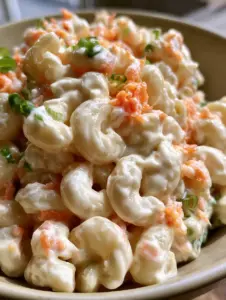
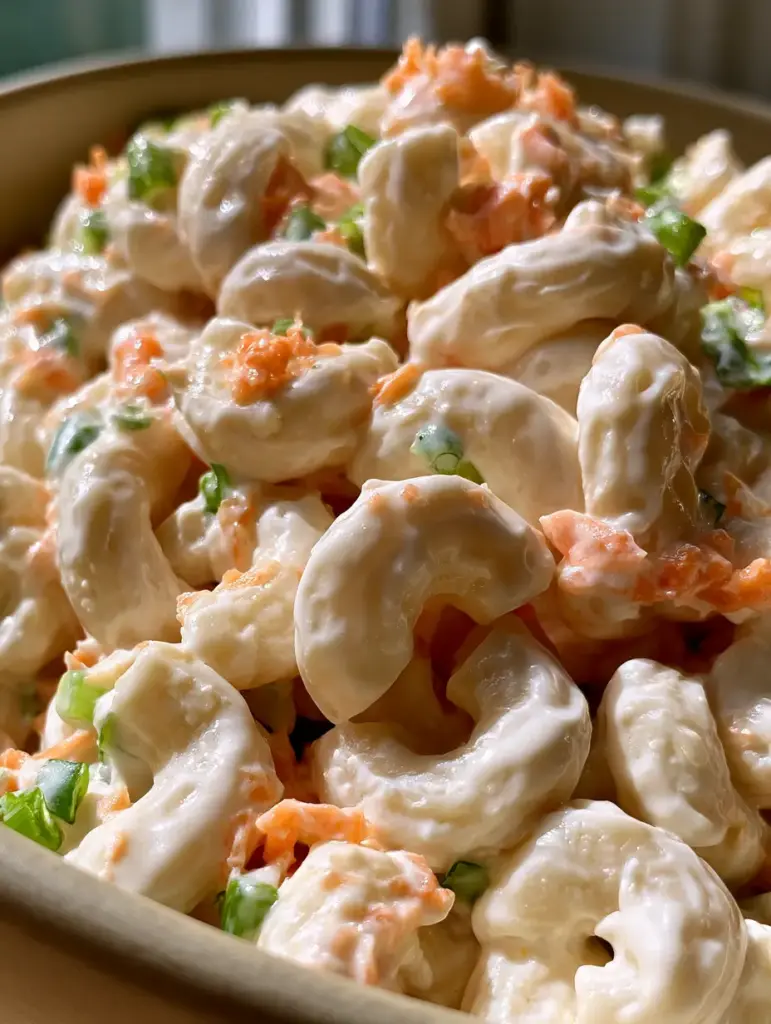
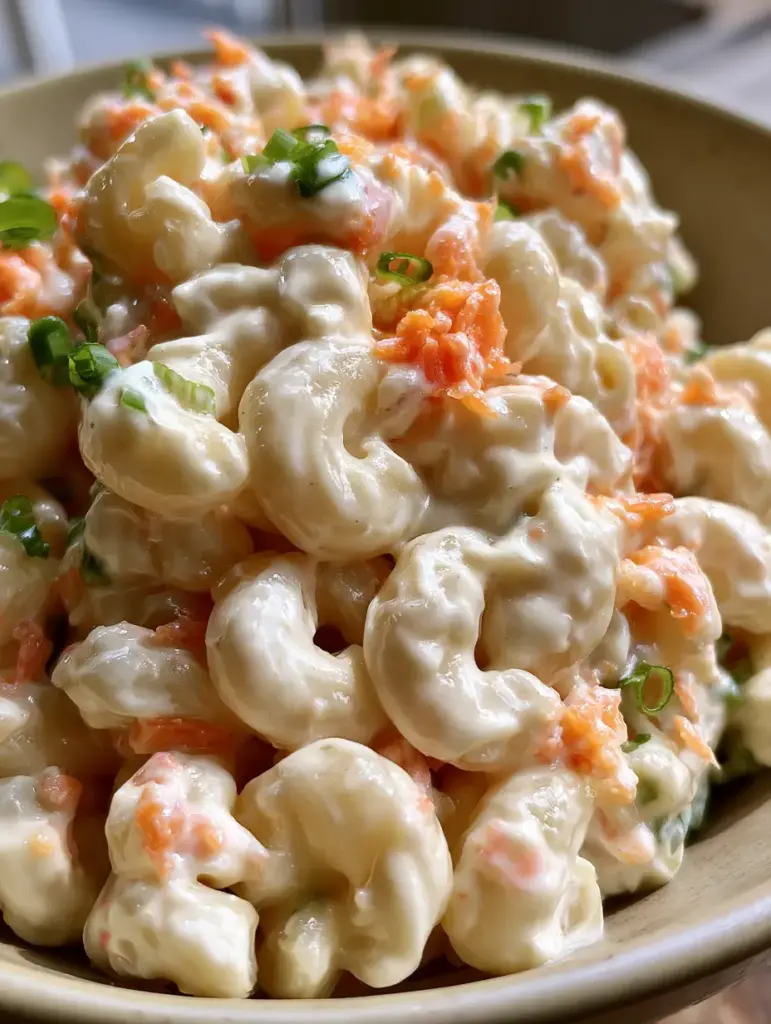
Instead, the authentic version is defined by its soft, plump noodles and an ultra-glossy, ivory-white dressing that clings to every curve of the macaroni. The visual appeal is undeniable, featuring vibrant orange carrot shreds and bright green scallions that pop against the creamy landscape, as seen in our high-definition macro photography. In this guide, we will break down the culinary science required to achieve that specific “wet” emulsified texture that separates the amateurs from the island experts.
The Anatomy of a Perfect Island-Style Side Dish
Achieving the forensic accuracy of a true island scoop requires more than just mixing mayo and pasta. The Hawaiian macaroni salad relies on a specific set of textural markers that we have carefully mapped out to ensure your results match the stunning visual blueprint of a professional kitchen. The secret lies in the intentional overcooking of the pasta and the emulsification of the dressing.
- Soft, Plump Pasta: Unlike Italian pasta, which demands an “al dente” bite, this recipe requires elbow macaroni that is cooked past the point of firmness. This allows the starch to swell and absorb the seasoned dressing.
- Ultra-Glossy Dressing: The dressing must look wet and emulsified, creating a subtle glisten under natural light. We achieve this by using a high ratio of heavy mayonnaise tempered with whole milk.
- Finely Grated Aromatics: The carrots and onions must be grated, not chopped. This ensures they melt into the dressing, providing flavor and color without interrupting the soft mouthfeel.
- Vibrant Visual Contrast: The flecks of bright green scallion and orange carrot provide the necessary “pop” to make the dish visually enticing.
The Scientific Selection of Ingredients
To recreate the iconic Hawaiian macaroni salad, every ingredient serves a functional purpose. While the visual prompt dictates the colors and textures, culinary science dictates the proportions needed for structural integrity and shelf stability.
Elbow Macaroni (1 lb / 454g): We use standard semolina elbow macaroni because the ridges and hollow center are designed to hold onto heavy, viscous sauces. The shape is the foundation of the “plump” look.
Heavy Mayonnaise (2.5 cups / 600ml): For that specific ivory-white color and glossy sheen, a high-fat, egg-yolk-heavy mayonnaise like Hellman’s or Best Foods is non-negotiable. Avoid “salad dressings” or low-fat alternatives.
Cider Vinegar (1/4 cup / 60ml): This is the “invisible” ingredient that provides the necessary tang. When added to the hot noodles, it penetrates the starch, seasoning the pasta from the inside out.
Whole Milk (1/2 cup / 120ml): Milk acts as an emulsifier for the mayo, thinning it just enough to create that “wet” look described in our visual prompt without making the salad watery.
Granulated Sugar (2 tbsp / 25g): Authentic island mac salad has a distinct sweetness. Sugar balances the acidity of the vinegar and enhances the richness of the mayonnaise.
Sweet Onion (2 tbsp / 30g, finely grated): Grating the onion releases its juices, which permeate the dressing and provide a savory backbone that chopped onion simply cannot achieve.
Carrot (1 medium, finely grated): The carrot provides the vibrant orange shreds seen in the macro photography. Finely grating them ensures they stay suspended in the thick dressing.
Fresh Scallions (1/4 cup / 15g, finely chopped): Use both the white and bright green parts to achieve the “flecks” of color seen in the soft-focus background of our visual guide.
Ground Black Pepper (1/2 tsp / 1g): A subtle pinch adds depth and small dark flecks that break up the ivory-white surface of the emulsified dressing.
Essential Tools for Visual Accuracy
To achieve the professional texture and appearance shown in the handheld smartphone food photography of this recipe, you will need a few specific kitchen tools. The most important is a box grater with a fine-hole side, which is necessary for the carrots and onions.
You will also need a large stockpot to ensure the macaroni has enough room to expand and become “plump.” A silicone spatula is recommended for folding the dressing, as it ensures you coat every noodle without breaking the soft, overcooked pasta. Finally, a neutral-toned ceramic bowl will provide the perfect backdrop for your salad to glisten under natural side-lighting.
Mastering the Culinary Technique
The process of creating a Hawaiian macaroni salad is counterintuitive to most Western pasta cooking. Follow these steps carefully to ensure the final dish has the authentic “wet” and “plump” appearance required for a successful plate lunch presentation.
The “Overcook” Method for Maximum Absorption
Bring a large pot of salted water to a rolling boil. Add 1 lb (454g) of elbow macaroni and cook for 2–3 minutes longer than the package instructions suggest. You are looking for a visual cue: the noodles should look slightly bloated and feel soft to the touch. Once they reach this stage, drain them but do not rinse with cold water yet.
The Vital Vinegar Soak
While the macaroni is still steaming hot, transfer it to a large bowl and immediately toss it with 1/4 cup (60ml) of cider vinegar. This is a critical culinary bridge; the heat allows the vinegar to be absorbed into the noodle. Let the pasta cool for about 10–15 minutes at room temperature until it is no longer steaming but still slightly warm.
Emulsifying the Glossy Dressing
In a separate medium bowl, whisk together the 2.5 cups (600ml) of mayonnaise, 1/2 cup (120ml) of whole milk, 2 tbsp (25g) of sugar, and 1/2 tsp (1g) of black pepper. Whisk until the mixture is completely smooth and displays a wet, glossy sheen. The sugar must be fully dissolved to ensure a silky mouthfeel.
Incorporating the Vibrant Aromatics
Add the finely grated carrots and sweet onion to the dressing, stirring to distribute the vibrant orange shreds. Once the pasta has cooled slightly, pour the dressing over the macaroni. Use a folding motion to ensure every plump noodle is heavily coated in the thick, ivory-white cream. Finally, fold in the chopped bright green scallions.
Expert Tips for the Perfect Island Scoop
- The Overnight Rule: While you can eat this salad after two hours of chilling, the texture is best after 12–24 hours. This gives the macaroni time to fully hydrate with the dressing, resulting in that iconic soft texture.
- Re-Hydration Hack: If the salad looks a bit dry after chilling (macaroni is a sponge!), simply stir in an extra tablespoon of milk before serving to restore the glossy, wet sheen.
- Temperature Control: Never add the mayonnaise to the macaroni while it is piping hot, or the mayo will “break” and become greasy rather than creamy.
- Salt Balance: Since the mayonnaise is naturally salty, taste the salad at the very end before adding any additional sea salt.
Complementary Pairings for Your Summer BBQ
This Hawaiian macaroni salad is the ultimate companion for smoky and savory grilled meats. If you are looking to build a full spread, consider how the creamy texture of the mac salad interacts with other flavors.
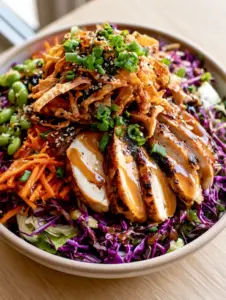
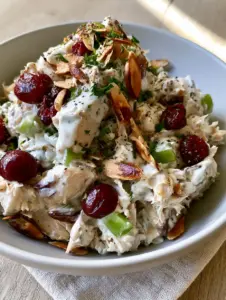
For a complete chicken-themed lunch, this pairs beautifully alongside a creamy chicken salad or the fruit-forward notes of a Sonoma chicken salad. If you want to lean into the Pacific Rim flavors, try serving it with an Asian chicken crunch salad. To cut through the richness of the mayonnaise, a side of refreshing watermelon fries provides a sweet and crisp palate cleanser that guests will love.
Frequently Asked Questions
For an authentic Hawaiian mac salad, it is best to use a heavy, full-fat mayonnaise like Best Foods or Hellman’s. Miracle Whip is too sweet and thin, which will prevent you from achieving the glossy, ivory-white coating.
Yes. Grating the onion releases juice that seasons the entire dressing, and finely grating the carrots ensures a smooth, soft texture that matches the overcooked pasta without adding unwanted crunch.
When stored in an airtight container, it stays fresh for 3-5 days. In fact, it often tastes better on day two after the flavors have fully melded.
Overcooking the pasta by 2-3 minutes allows the starch to expand and soften. This creates a ‘plump’ noodle that better absorbs the vinegar and creamy dressing, preventing the salad from becoming dry.
Sugar is a traditional component of island-style mac salad. it balances the acidity of the cider vinegar and the saltiness of the mayonnaise, providing the signature sweet-savory profile found in Hawaii.
Authentic Hawaiian Macaroni Salad Recipe
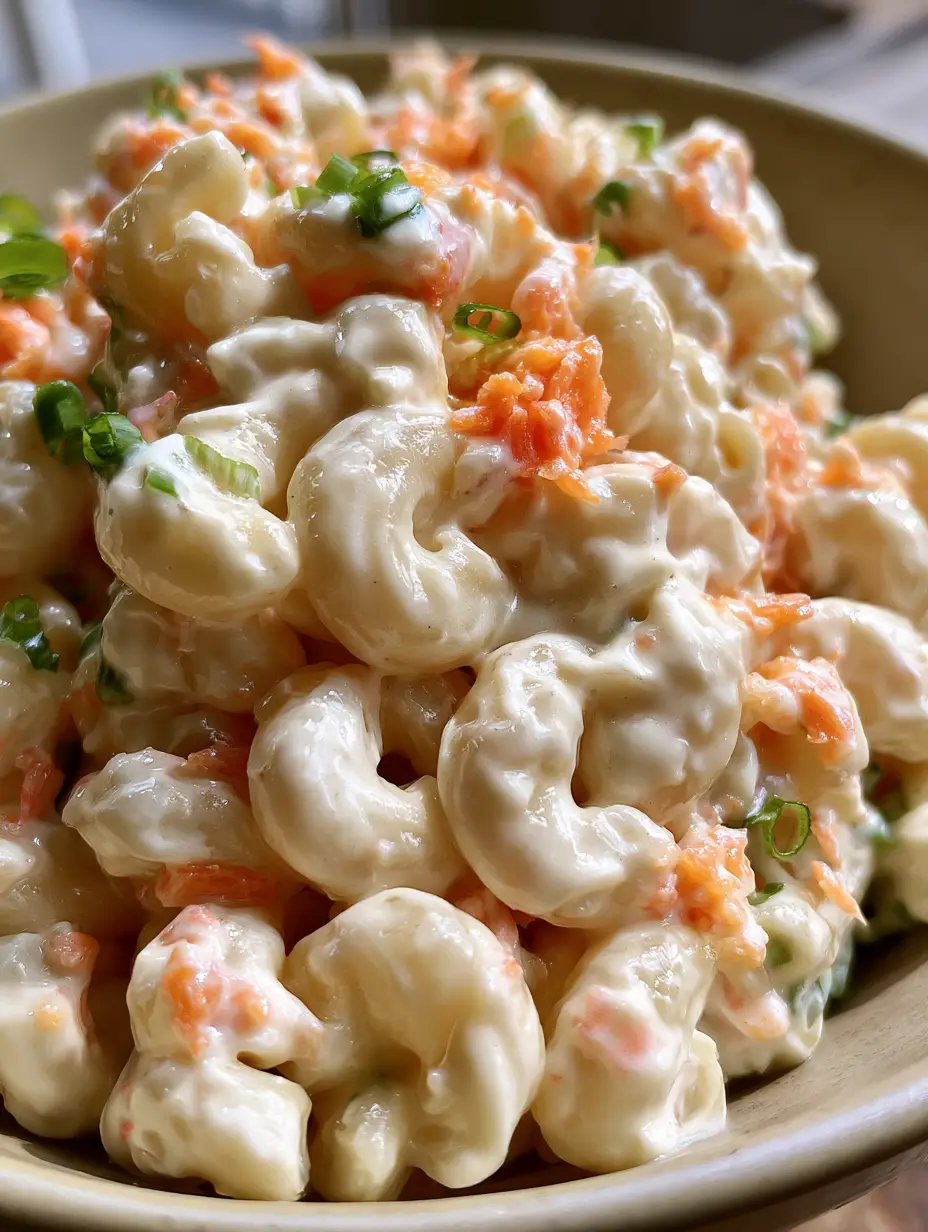
Hawaiian Macaroni Salad: The Authentic Creamy Plate Lunch Classic
Ingredients
Equipment
Method
- Bring a large pot of salted water to a boil. Add the macaroni and cook for 12-15 minutes, or until the noodles are plump and soft (overcooked past al dente).
- Drain the pasta (do not rinse). While still hot, transfer to a bowl and toss with cider vinegar. Let cool for 15 minutes.
- In a separate bowl, whisk mayonnaise, milk, sugar, and black pepper until a glossy, ivory-white sheen forms.
- Fold the grated carrots, grated onion, and dressing into the pasta. Stir in the scallions. Cover and refrigerate for at least 4 hours, preferably overnight.
Notes
If the salad seems dry after refrigerating, stir in a splash of milk to restore the glossy texture.
Sharing the Spirit of Aloha
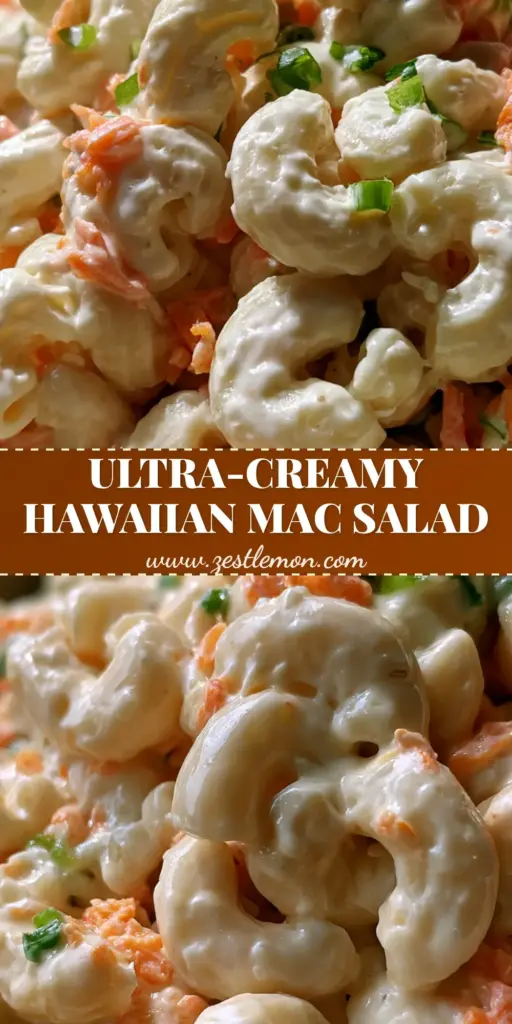
Creating the perfect Hawaiian macaroni salad is about patience and the right techniques. By following the “overcook and soak” method, you ensure a side dish that is as visually stunning as it is delicious. The glossy sheen and vibrant colors make it a centerpiece of any gathering.
We would love to see your results! If you make this recipe, please leave a comment below and tell us how your “island scoop” turned out. Don’t forget to follow us on Pinterest and share this recipe with your fellow home cooks.