The Creamy crab salad is a quintessential deli classic that bridges the gap between affordable weeknight lunches and elegant weekend brunches. When prepared with professional technique, this dish transforms simple ingredients into a gourmet experience defined by its meaty textures and vibrant colors.
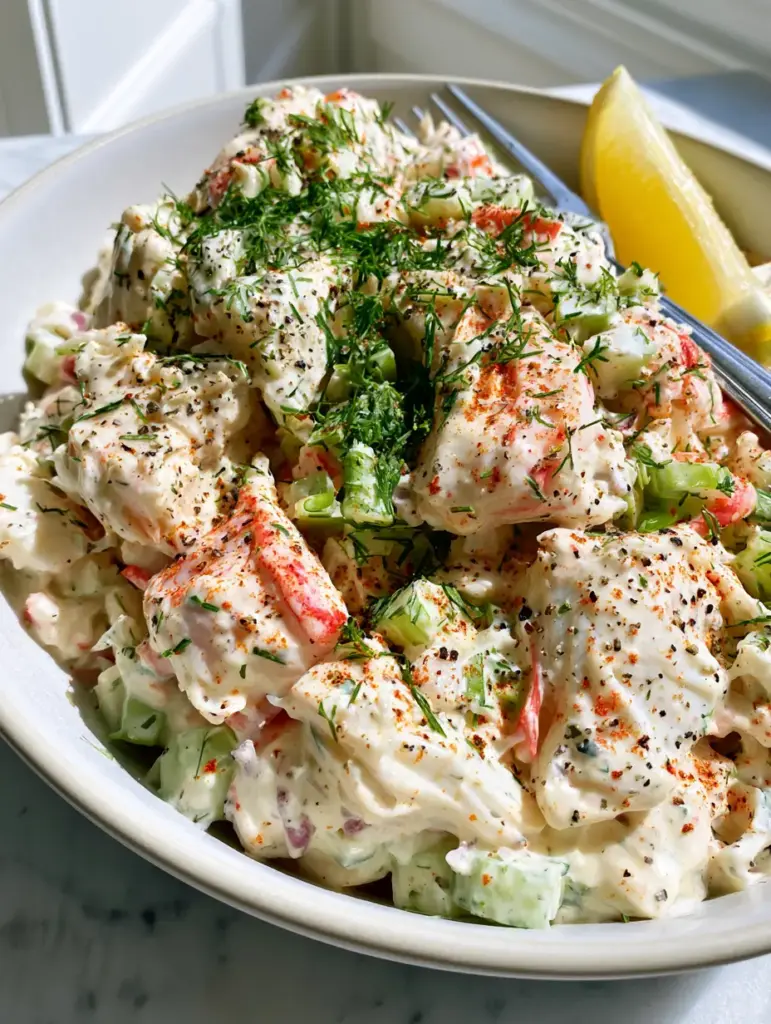
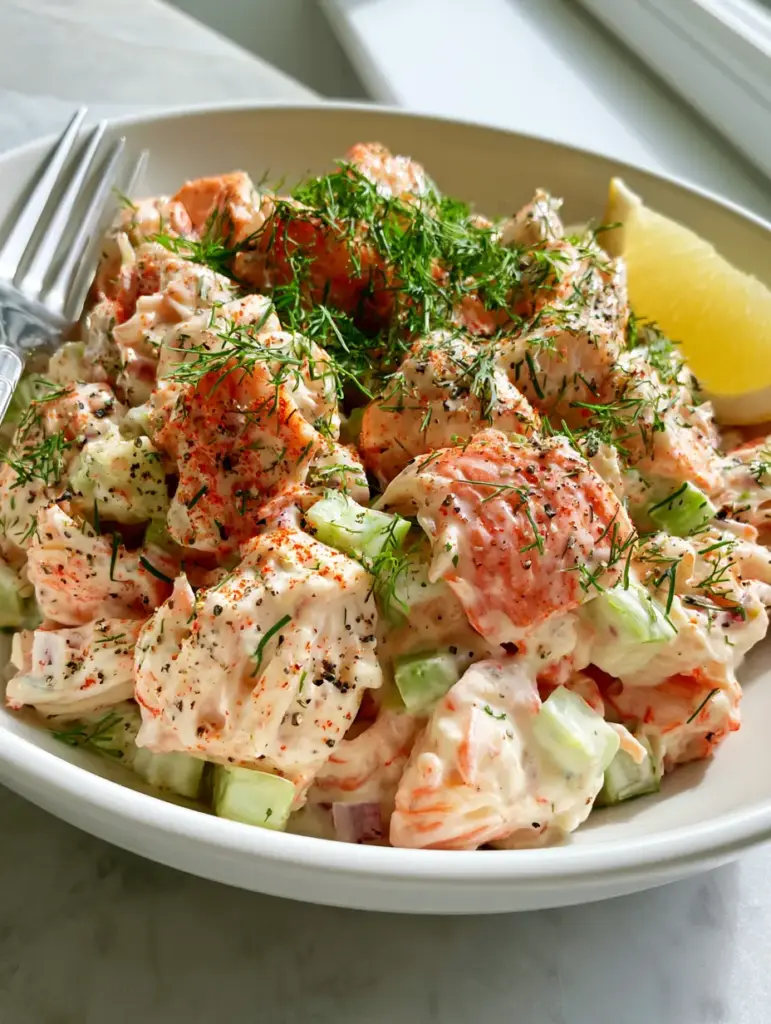
Imagine a shallow ceramic bowl filled with large, meaty chunks of shredded imitation crab, every crevice coated in a thick, glossy, ivory-colored dressing. The visual appeal is heightened by the contrast of finely diced crisp green celery and the tiny jewel-like flecks of minced red onion peaking through the creaminess.
To finish the look, we apply a heavy garnish of fresh chopped green dill and a light, fiery dusting of red Old Bay seasoning. This isn’t just a recipe; it’s a masterclass in balancing the sweetness of surimi with the sharp acidity of lemon and the earthy warmth of cracked black pepper.
Why This Deluxe Seafood Salad Surpasses the Deli Counter
- Meaty Texture: By hand-shredding the imitation crab rather than dicing it, you create “crannies” that trap the thick dressing, ensuring every bite is succulent.
- Glossy Emulsion: We utilize a specific ratio of high-fat mayonnaise and fresh lemon juice to achieve that signature “smartphone photo” glossy finish seen in professional food photography.
- Visual Vibrancy: The combination of bright green celery, deep red onion, and the iconic red dusting of Old Bay provides a color palette that pops against a neutral marble countertop.
- Sensory Balance: You get the crunch of the celery, the softness of the crab, the zing of the citrus, and the aromatic punch of fresh dill in every forkful.
The Anatomy of the Perfect Seafood Dressing and Base
To recreate the exact result found in our visual blueprint, you must be meticulous with your selection of ingredients. Every component serves a structural and flavor-based purpose in the final Creamy crab salad.
1 lb (450g) Imitation Crab (Surimi): Look for the “leg style” or “chunk style” rather than the flakes. The leg style allows you to create those long, meaty shreds that give the salad its premium, high-resolution appearance.
1 cup (240ml) High-Quality Mayonnaise: This is the foundation of your ivory dressing. A full-fat mayonnaise provides the necessary viscosity to coat the ingredients without weeping or becoming watery over time.
1/2 cup (120ml) Green Celery: You must use the inner ribs of the celery for the brightest green color. The celery must be finely diced to ensure a consistent crunch that doesn’t overwhelm the delicate crab.
1/4 cup (60ml) Red Onion: Mincing the red onion into tiny bits is crucial. This allows the sharp flavor to distribute evenly and adds tiny specks of purple-red color to the ivory base.
2 tbsp (8g) Fresh Dill: Freshness is non-negotiable here. The dill should be vibrant green and finely chopped to provide that “heavy garnish” look that signifies a fresh, homemade dish.
1 tbsp (15ml) Fresh Lemon Juice: This acts as a brightener for the heavy mayonnaise. The acid cuts through the fat and brings out the sweetness of the imitation crab meat.
1 tsp (5g) Old Bay Seasoning: This provides the signature red dusting. It offers a complex blend of celery salt, black pepper, and paprika that is synonymous with coastal seafood recipes.
1/2 tsp (2g) Cracked Black Pepper: Coarsely cracked pepper provides visual “specs” in the dressing, contrasting beautifully against the white ceramic bowl.
Kosher Salt to Taste: Essential for heightening the natural flavors of the surimi and aromatics.
Essential Tools for Culinary Forensic Accuracy
To achieve the food photography style described in the Midjourney prompt, you need the right equipment. Professional results are rarely achieved with standard kitchen shears or dull knives.
First, a chilled ceramic bowl is vital. Placing your serving bowl in the refrigerator for 20 minutes before plating ensures the salad stays crisp and the dressing maintains its glossy, thick consistency. A shallow white bowl is preferred to showcase the “handheld smartphone photo” perspective.
Second, a sharp Chef’s knife is required for the finely diced celery and minced red onion. If the vegetables are crushed rather than sliced, they will release excess moisture, turning your thick dressing into a thin, unappealing liquid. A silver fork is also mentioned in our blueprint for that classic, ready-to-eat aesthetic.
Mastering the Meaty Texture: Step-by-Step Instructions
Phase 1: Preparing the Crab and Aromatics
Begin by patting your imitation crab meat dry with paper towels. Excess brine is the enemy of a glossy dressing. Using your hands, shred the crab into large, meaty chunks about 2 inches (5cm) in length. If you are using a classic crab salad recipe, you know that texture is everything.
Next, focus on your celery. Slice the ribs into very thin batons, then turn them and dice them into 1/8-inch (3mm) pieces. The goal is “crisp green” uniformity. Follow suit with the red onion, mincing it until it resembles tiny garnets.
Phase 2: Crafting the Thick Ivory Dressing
In a separate small mixing bowl, combine the mayonnaise, lemon juice, and half of the cracked black pepper. Whisk these until the dressing is smooth and reflects the bright natural daylight. This emulsion should be thick enough to hold a soft peak.
Fold in the minced red onion and the finely diced celery. By mixing the aromatics into the dressing first, you ensure they are perfectly suspended in the ivory cream before they meet the crab.
Phase 3: The Gentle Fold and Chill
Add the shredded crab chunks to a large mixing bowl. Pour the dressing over the top. Using a rubber spatula, gently fold the mixture. You want to coat every piece of crab without breaking the large meaty chunks into a mushy paste.
Cover the bowl and refrigerate for at least 30 minutes. This “resting” period allows the flavors to meld and the dressing to set into that thick, glossy finish we are looking for.
Phase 4: Plating and Visual Garnishing
Transfer the chilled Creamy crab salad into your pre-chilled shallow white ceramic bowl. Arrange the crab so the largest chunks are visible on top, catching the light. This mimics the high-resolution food photography style.
Now, apply the garnishes. Sprinkle the fresh chopped dill generously across the surface. Follow with the remaining cracked black pepper. Finally, take your Old Bay and, using a fine-mesh sieve or a steady hand, create a light dusting of red across the top. Place a bright yellow lemon wedge on the side and a silver fork resting against the rim.
Professional Secrets for a Non-Watery Salad
- The Mayo Choice: Never use “salad dressing” spreads or low-fat alternatives. They contain more water and will break down within an hour of mixing.
- The Celery Cure: If you have time, toss your diced celery with a pinch of salt and let it sit in a strainer for 10 minutes. Rinse and dry thoroughly. This removes internal water that usually thins the dressing.
- Dill Placement: Only add the dill right before serving. If mixed in too early, the acid in the lemon juice can turn the vibrant green dill into a dull brown.
- Temperature Control: Always serve in a chilled bowl. The heat from a room-temperature ceramic dish can cause the fats in the mayo to liquefy, losing that “glossy ivory” look.
Keeping It Fresh: Storage and Safety Advice
Because this Creamy crab salad relies on a mayonnaise base and seafood proteins, safety is paramount. Store any leftovers in an airtight container immediately after serving. It will remain fresh and delicious for up to 3 days in the refrigerator.
We do not recommend freezing this salad. The emulsion of the mayonnaise will break upon thawing, resulting in a grainy texture and a separated, oily mess. If the salad has sat out at room temperature for more than 2 hours (or 1 hour in high heat), it should be discarded.
Perfect Pairings for Your Seafood Spread
This salad is incredibly versatile. For a light lunch, serve it atop a bed of butter lettuce or stuffed into a buttery croissant. It also makes a fantastic side dish for a larger spread featuring a classic potato salad or a refreshing cucumber caprese salad.
If you are hosting a summer potluck, consider serving this alongside a tuna macaroni salad to give your guests multiple seafood options. For those who prefer poultry, this recipe follows a similar flavor profile to a Sonoma chicken salad, making them great companion dishes.
Frequently Asked Questions
Yes, you can use lump crab meat. However, ensure you drain it thoroughly and fold it very gently to avoid breaking the delicate lumps, as real crab is more fragile than surimi.
The secret is to pat the crab meat dry before shredding and to use a high-fat, full-bodied mayonnaise. Avoiding watery vegetables like cucumbers also helps maintain the thick consistency.
Most imitation crab (surimi) contains wheat starch as a binder, so it is not typically gluten-free. Check the label carefully or use real crab meat if you have a gluten sensitivity.
Use ‘leg-style’ surimi and pull it apart by hand along the natural grain. This creates the ‘meaty chunks’ seen in professional food photography rather than a uniform mush.
The Ultimate Creamy Crab Salad Recipe
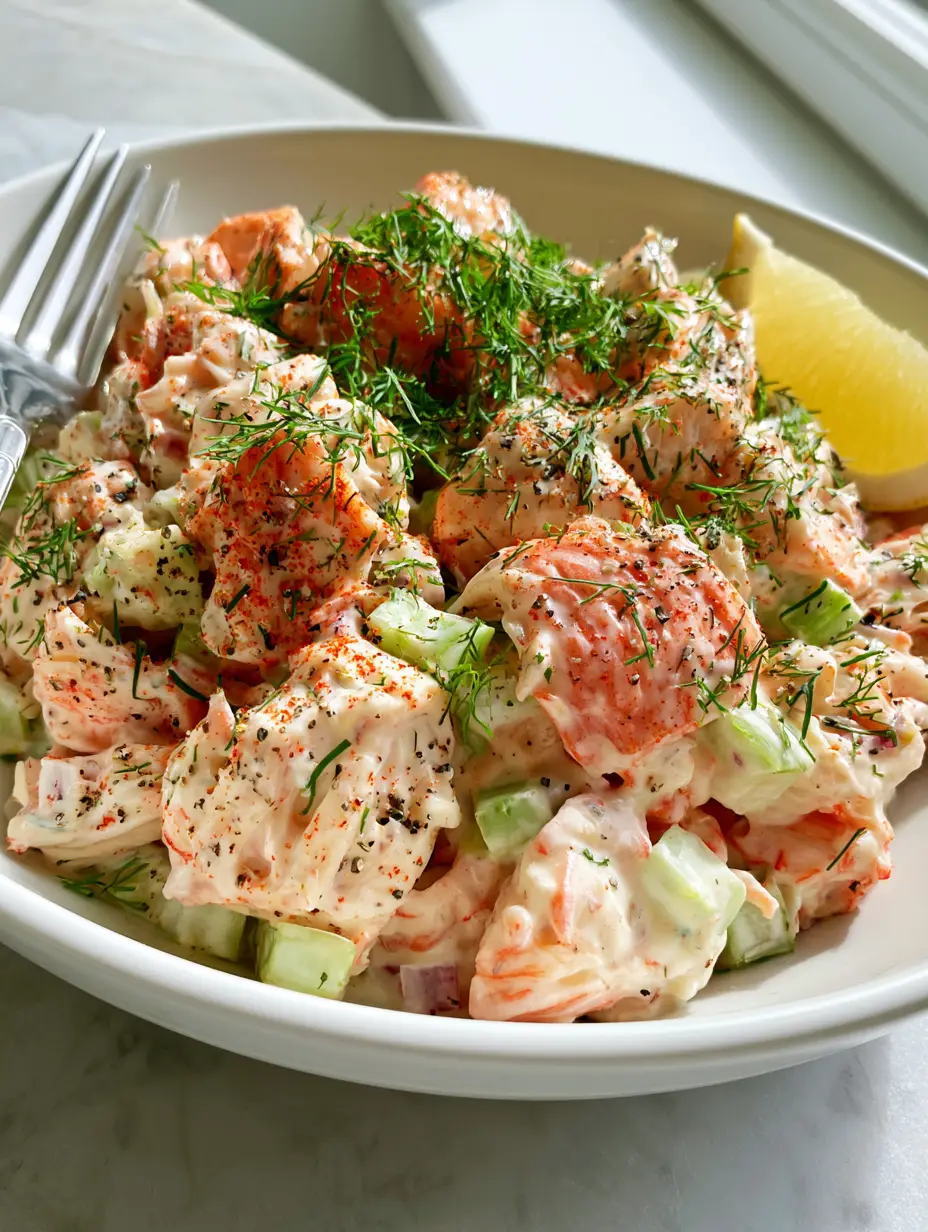
Creamy Crab Salad with Old Bay and Fresh Zesty Dill
Ingredients
Equipment
Method
- Pat the imitation crab dry and hand-shred into large, meaty chunks. Avoid over-handling to keep pieces intact.
- Finely dice the green celery and mince the red onion into tiny bits for even distribution.
- Whisk mayonnaise and lemon juice in a bowl until you have a thick, glossy, ivory-colored dressing.
- Gently fold the crab chunks and diced vegetables into the dressing. Chill in the refrigerator for 30 minutes.
- Transfer to a chilled ceramic bowl. Dust heavily with fresh dill, cracked black pepper, and a light coating of Old Bay. Serve with a lemon wedge.
Notes
Always chill your serving bowl to keep the mayo dressing thick and glossy.
Closing & Call to Action
Creating a restaurant-quality Creamy crab salad is all about the details—the precision of the dice, the quality of the mayo, and the vibrancy of the garnishes. Whether you’re preparing this for a quick lunch or a stunning centerpiece for a brunch, the meaty chunks and glossy dressing are sure to impress.
Did you try this recipe? We’d love to hear how your “red dusting” turned out! Leave a comment below and don’t forget to follow us and share your creations on Pinterest.