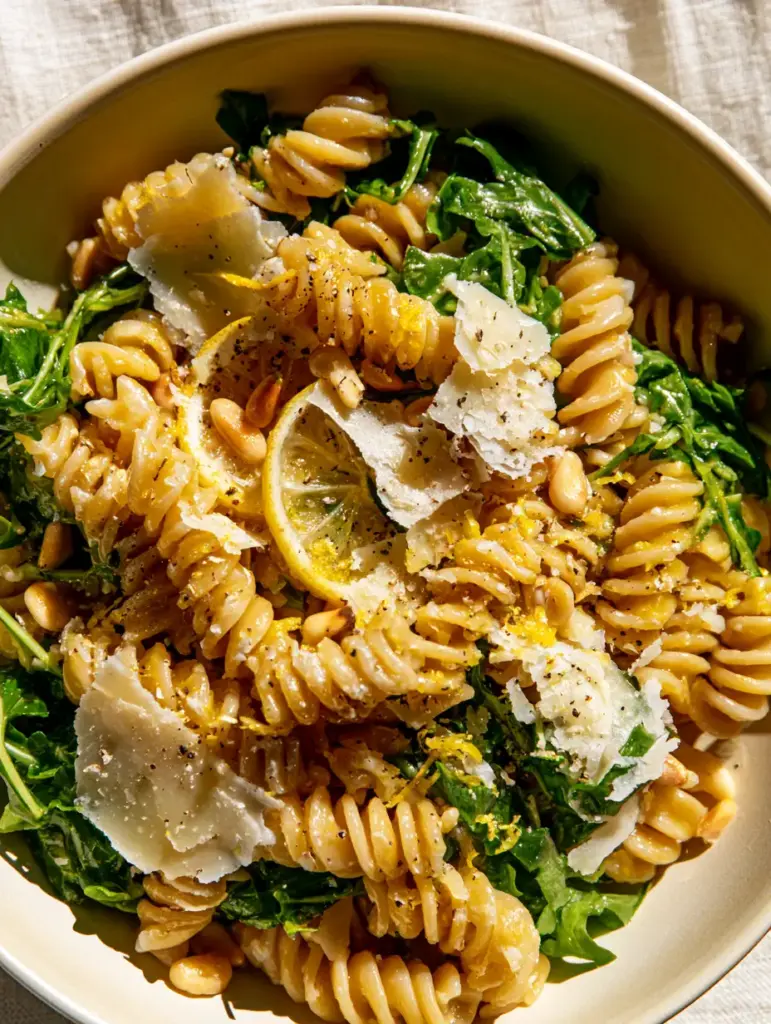
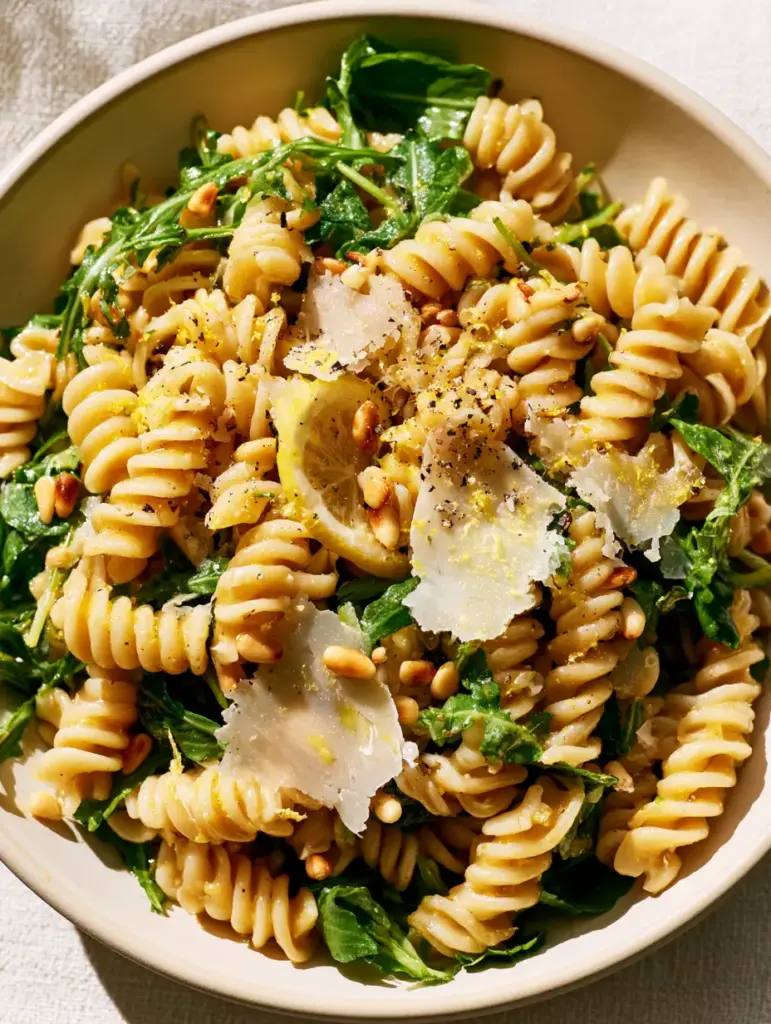
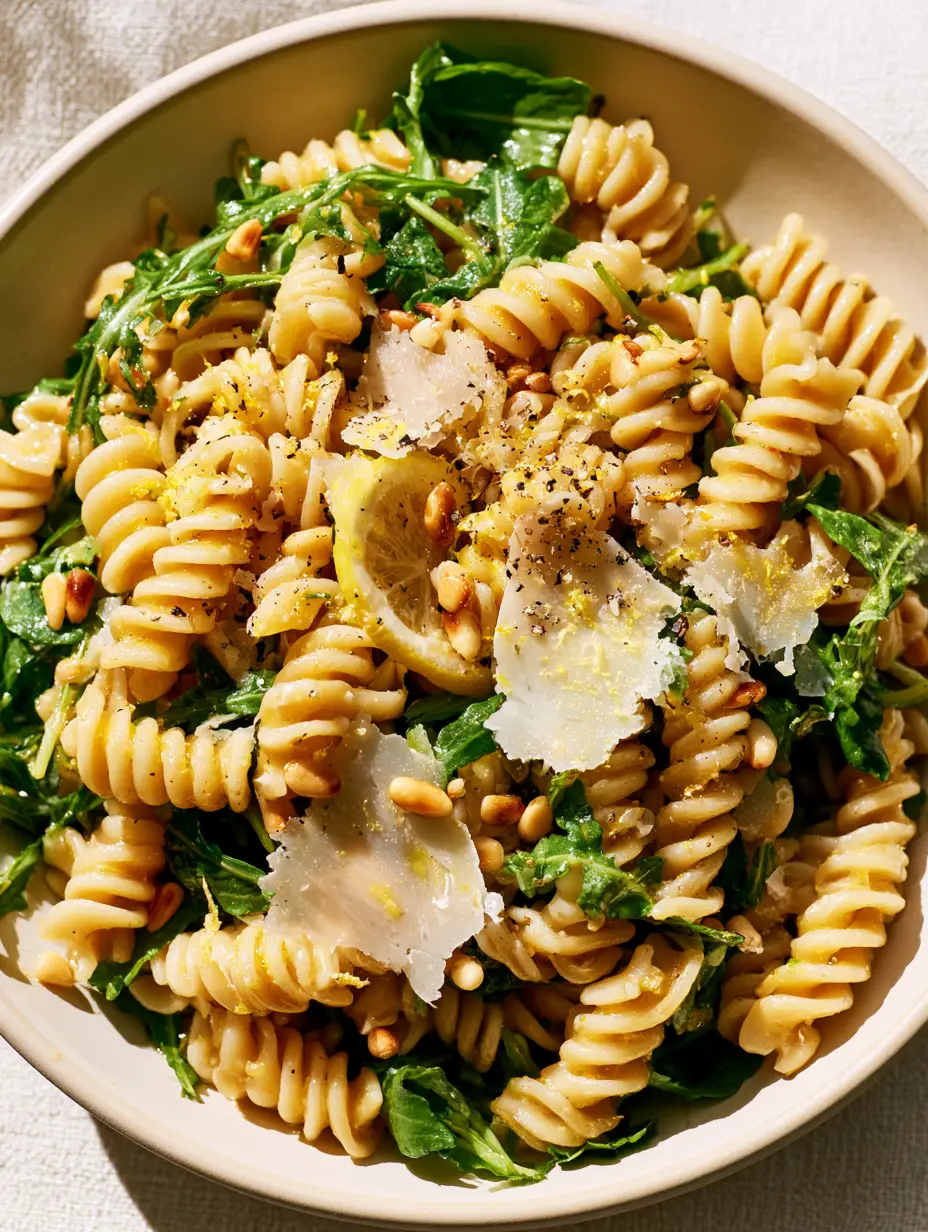
There is nothing quite like the bright, refreshing zing of a Lemon Parmesan Pasta Salad to awaken your palate during a warm afternoon meal. This isn’t your typical heavy, mayo-laden deli salad; instead, it is a sophisticated, vibrant dish that captures the essence of Mediterranean simplicity. Imagine perfectly coiled rotini pasta, glistening under a translucent golden lemon-garlic vinaigrette, nestled against peppery baby arugula and jagged, salty shards of aged parmesan cheese.
Every bite offers a symphony of textures, from the crunch of buttery toasted pine nuts to the tender snap of al dente spirals. The visual appeal is just as striking as the flavor profile, featuring paper-thin lemon half-moons tucked between the pasta and a generous dusting of coarse cracked black pepper. Whether you are hosting a summer garden party or seeking a gourmet lunch, this recipe delivers a high-impact culinary experience with minimal effort.
By focusing on high-quality, foundational ingredients, we transform simple pantry staples into a dish that looks like it stepped right out of a professional food shoot. The soft, bright natural daylight hitting the glossy sauce in your serving bowl will make this the centerpiece of any table. Let’s dive into the science and technique behind this citrus-forward masterpiece.
The Anatomy of a Perfect Zesty Pasta Bowl
- Al Dente Texture: Using rotini ensures the spirals catch and hold the translucent golden vinaigrette in every groove.
- Aged Umami: Shaved aged parmesan provides a sharp, salty contrast to the bright acidity of the fresh lemon.
- Aromatic Crunch: Toasted pine nuts add a necessary fatty richness and a golden-brown visual pop that elevates the dish.
- Peppery Freshness: Fresh baby arugula introduces a bite that balances the citrus zest and the richness of the olive oil.
Essential Ingredients for the Golden Vinaigrette and Base
To achieve the specific visual and flavor results of this Lemon Parmesan Pasta Salad, we must select ingredients that offer both structural integrity and vibrant color. The quality of your olive oil and the freshness of your lemons are non-negotiable here.
1 lb (454g) Rotini Pasta: The spiral shape is essential for texture and sauce retention. Ensure you cook it in heavily salted water to season the pasta from the inside out.
1/2 cup (120ml) Extra Virgin Olive Oil: This forms the base of our glistening sauce. Use a high-quality oil with a fruity finish to complement the lemon zest.
1/4 cup (60ml) Fresh Lemon Juice: Freshly squeezed juice provides the necessary acidity to cut through the fat of the cheese and nuts. Avoid bottled juice, which lacks the bright floral notes of fresh citrus.
2 tsp (4g) Fresh Lemon Zest: The zest contains the essential oils that provide a deep, aromatic lemon flavor without adding extra liquid. This is what gives the salad its signature “vibrant” appearance.
2 cloves (10g) Garlic, minced: A foundational aromatic that infuses the vinaigrette with a subtle savory depth. It should be finely minced to ensure it distributes evenly without overpowering a single bite.
1 cup (30g) Fresh Baby Arugula: These tender leaves should be added just before serving to maintain their crisp, bright green color and peppery snap.
1/2 cup (50g) Aged Parmesan Cheese: Use a vegetable peeler to create jagged, translucent shavings. The irregular edges catch the light and provide a beautiful, rustic aesthetic.
1/3 cup (45g) Pine Nuts: These must be toasted until golden brown. Their oils add a nutty fragrance that bridges the gap between the sharp cheese and the tart lemon.
1/2 Fresh Lemon, sliced into paper-thin half-moons: These are not just a garnish; they infuse the salad with extra citrus oils and look stunning tucked between the pasta spirals.
1 tsp (2g) Coarse Cracked Black Pepper: Large cracks of pepper provide a visual “dusting” and a slow-building heat that contrasts the cooling arugula.
1 tsp (6g) Sea Salt: Essential for balancing the acidity of the vinaigrette. Adjust based on the saltiness of your specific parmesan cheese.
Kitchen Gear for Professional Results
Achieving a restaurant-quality Lemon Parmesan Pasta Salad requires a few specific tools to ensure the textures are exactly as described in our blueprint. A wide, shallow matte-cream ceramic bowl is ideal for presentation, as it allows the ingredients to spread out rather than being compressed.
You will need a large stockpot for boiling the pasta, a fine-mesh zester for the lemon, and a sharp mandoline or chef’s knife for those paper-thin lemon half-moons. A small dry skillet is required for toasting the pine nuts, allowing you to monitor the Maillard reaction closely to prevent burning. Finally, a glass jar or whisk and bowl are necessary to properly emulsify the vinaigrette until it is translucent and golden.
Mastering the Culinary Technique Step-by-Step
1. Achieving the Perfect Al Dente Rotini
Bring a large pot of water to a rolling boil and add at least 2 tbsp (36g) of kosher salt. The water should taste like the sea. Add 1 lb (454g) of rotini and cook for about 8-9 minutes, or 1 minute less than the package directions. Visual Cue: The pasta should be tender but still offer a firm “snap” when bitten into. Drain the pasta and immediately spread it onto a baking sheet to cool slightly; do not rinse, as the natural starches help the vinaigrette cling to the spirals.
2. Toasting the Pine Nuts to Golden Perfection
Place a small dry skillet over medium-low heat. Add 1/3 cup (45g) of pine nuts. Shake the pan constantly for 3-5 minutes. Sensory Cue: You are looking for a deep golden-brown color and a rich, buttery aroma. Once they smell toasted, remove them from the pan immediately, as they will continue to cook in their own residual heat and can burn quickly.
3. Emulsifying the Translucent Golden Vinaigrette
In a small bowl or jar, combine 1/2 cup (120ml) extra virgin olive oil, 1/4 cup (60ml) fresh lemon juice, 2 cloves (10g) minced garlic, and 1 tsp (6g) sea salt. Whisk vigorously or shake the jar until the mixture is fully combined and slightly thickened. Visual Cue: The sauce should look vibrant and translucent golden, with no visible separation between the oil and the juice.
4. The Assembly and Visual Finishing
In your large matte-cream ceramic bowl, toss the cooled pasta with the vinaigrette until every spiral is glistening. Gently fold in the fresh baby arugula and the jagged shavings of aged parmesan. Styling Tip: Tuck the paper-thin lemon half-moons into the crevices of the pasta. Sprinkle the toasted pine nuts, fresh lemon zest, and coarse cracked black pepper over the top just before serving. The lighting should highlight the glossy texture of the sauce and the sharp edges of the cheese.
Expert Tips for Success
- Temperature Control: Never toss the arugula with hot pasta. Let the rotini reach room temperature first to ensure the greens stay bright and crisp rather than wilting into a dark green mess.
- Cheese Quality: Avoid pre-shredded parmesan. The cellulose coating on pre-shredded cheese prevents it from melding with the dressing. Use a block of Parmigiano-Reggiano for those iconic jagged edges.
- Lemon Selection: Choose lemons that feel heavy for their size and have smooth skin. These are typically juicier and easier to zest than thick-skinned, bumpy lemons.
- The “Glisten” Factor: If the pasta absorbs too much dressing before serving, a quick drizzle of extra virgin olive oil right before the photo or the first bite will restore that vibrant, translucent glow.
Shelf Life and Storage Insights
This Lemon Parmesan Pasta Salad is best enjoyed within 2-4 hours of assembly, as the arugula is at its peak crispness. However, you can store leftovers in an airtight container in the refrigerator for up to 3 days. Note that the pasta will continue to absorb the dressing, so you may need to add a fresh squeeze of lemon and a teaspoon of olive oil to revive the flavors.
We do not recommend freezing this salad. The texture of the arugula and the emulsified vinaigrette will break down during the thawing process, resulting in a soggy dish that loses its visual and structural integrity. If you are meal-prepping, store the pasta/dressing and the arugula/nuts separately, combining them only when you are ready to eat.
What to Serve With This Zesty Pasta
This dish is incredibly versatile. It serves as a light main course or a stunning side for grilled proteins like salmon or lemon-herb chicken. If you are looking to build a full pasta-themed spread, consider pairing it with a variety of textures from our other favorites.
For a heartier gathering, you might include a classic Italian pasta salad alongside this lemon version to offer guests a choice between herbaceous and citrus profiles. If you’re hosting a family event, our simple kids pasta salad is a great way to keep the little ones happy while the adults enjoy the sophisticated flavors of the arugula and aged parmesan. For those who love a bit of crunch and a different flavor profile, a savory bacon broccoli pasta salad provides a wonderful smoky contrast to the bright lemon notes here. You can explore our full range of pasta salad recipes for even more inspiration.
Frequently Asked Questions
Absolutely. You can prepare the vinaigrette up to a week in advance and store it in the fridge. Just be sure to give it a vigorous shake before using to re-emulsify the oil and lemon juice.
Yes, while rotini is ideal for catching the vinaigrette in its spirals, fusilli or farfalle (bowtie) pasta are excellent substitutes that maintain a similar texture and visual appeal.
The key is to allow the pasta to cool to at least room temperature before tossing in the arugula. If the pasta is even slightly warm, the leaves will lose their crispness and turn soft.
If you don’t have pine nuts, toasted slivered almonds or chopped walnuts provide a similar buttery crunch. For a nut-free version, toasted sunflower seeds work beautifully.
Use a standard vegetable peeler on a block of aged Parmigiano-Reggiano. Pull the peeler across the long edge of the cheese to create those beautiful, jagged, translucent shavings.
Lemon Parmesan Pasta Salad Recipe
Lemon Parmesan Pasta Salad with Toasted Pine Nuts and Arugula
Ingredients
Equipment
Method
- Boil rotini in salted water until al dente (approx 8-9 minutes). Drain and spread on a sheet to cool.
- Toast pine nuts in a dry skillet over medium-low heat until golden brown and fragrant.
- Whisk olive oil, lemon juice, lemon zest, garlic, salt, and pepper until a translucent golden emulsion forms.
- Toss the cooled pasta with the vinaigrette until every spiral is glistening.
- Fold in arugula and shaved parmesan. Decorate with lemon half-moons and a final dusting of black pepper.
Notes
Use a vegetable peeler for the best jagged parmesan shavings.
Closing & Call to Action
This Lemon Parmesan Pasta Salad is a testament to the power of simple, high-quality ingredients. Its balance of bright citrus, salty cheese, and peppery greens makes it a recurring favorite in any kitchen. The glistening texture and vibrant colors ensure it is as much a feast for the eyes as it is for the stomach.
If you enjoyed this recipe, please leave a comment below and let us know how your toasted pine nuts turned out! Don’t forget to follow us and share your creations on Pinterest to help other home cooks find this zesty inspiration. Subscribe to our newsletter for more elite culinary guides delivered straight to your inbox!