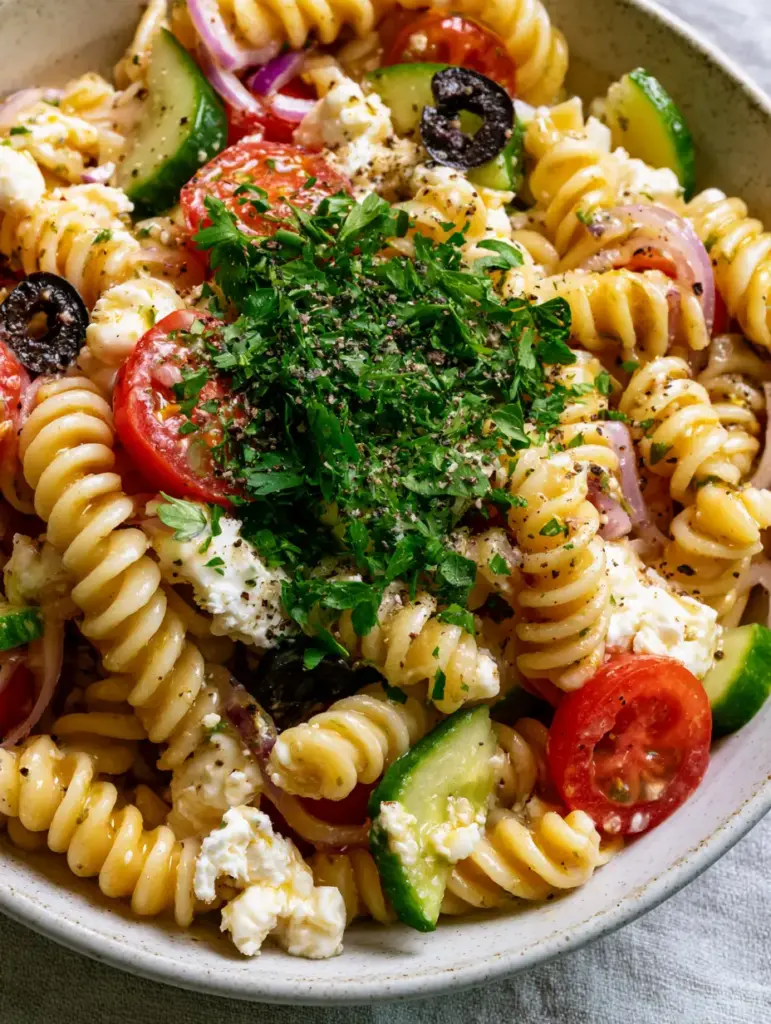
This tangy pasta salad is the ultimate expression of vibrant, Mediterranean-inspired flavors, designed to be the centerpiece of your next gathering. With its signature glossy coating and crisp, fresh vegetables, this dish strikes the perfect balance between acidic brightness and savory depth.
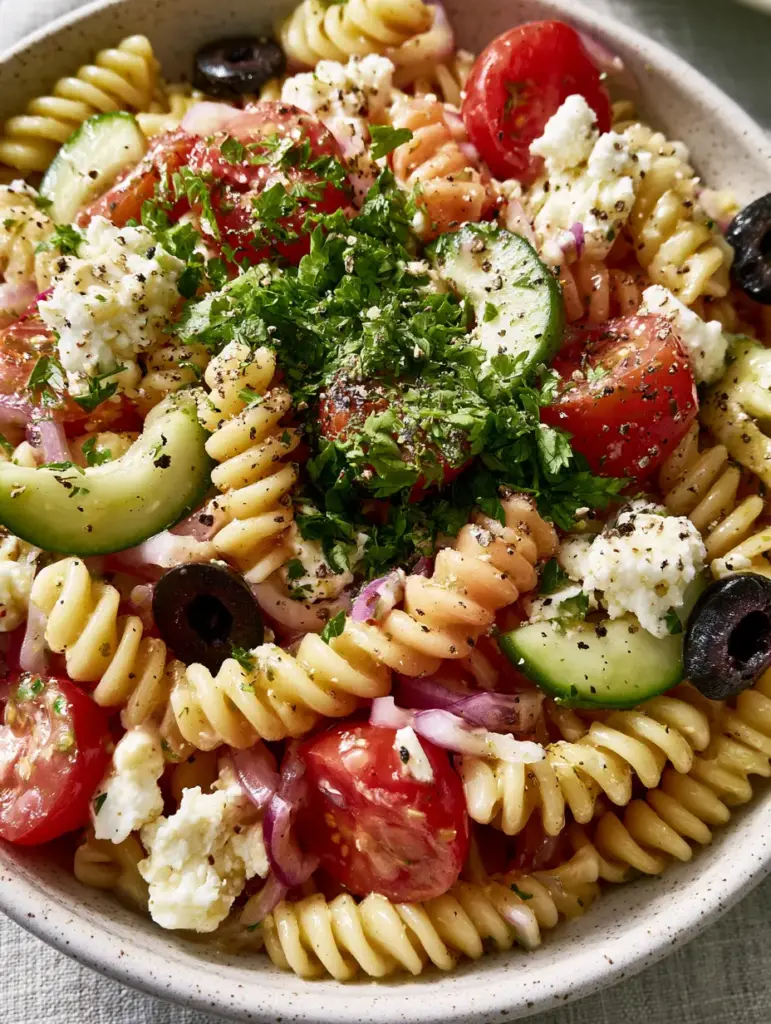
Every forkful offers a symphony of textures, from the firm, al dente rotini spirals to the creamy crumbles of rich feta cheese. The translucent herb vinaigrette doesn’t just sit on the pasta; it clings to every ridge, ensuring a burst of zesty flavor in every single bite.
Whether you are prepping for a weekend meal or looking for a reliable potluck classic, this recipe delivers professional-grade results with the ease of home cooking. Let’s dive into the culinary science of creating a salad that stays fresh, textured, and incredibly bold.
Why This Tangy Pasta Salad Recipe Works
- Textural Precision: We focus on achieving a true al dente rotini that stands up to the dressing without becoming mushy or waterlogged.
- Emulsified Gloss: The vinaigrette is engineered to be translucent and glossy, providing a beautiful sheen that enhances the visual appeal of the cherry tomatoes and cucumber crescents.
- Balanced Acidity: By balancing sharp red wine vinegar with a hint of honey and pungent Dijon, we create a “tangy” profile that stimulates the palate without being overwhelming.
- Forensic Freshness: The use of paper-thin red onions and coarse cracked black peppercorns provides a sharp, spicy finish that cuts through the creaminess of the feta.
The Anatomy of a Perfect Tangy Pasta Salad
To achieve the result seen in high-end culinary photography, every ingredient must serve a specific structural and flavor purpose. We aren’t just tossing things in a bowl; we are building layers of taste.
Firm Rotini Pasta: 16 oz (454g). The spiral shape is essential for trapping the vinaigrette, but it must be cooked in heavily salted water to ensure the pasta itself has flavor.
Halved Cherry Tomatoes: 2 cups (300g). These provide “plump, juicy” bursts of sweetness that contrast the vinegary dressing. Ensure they are room temperature for the best flavor release.
Crisp Cucumber Crescents: 1 large (approx. 300g). By slicing them into crescents, we increase the surface area for the dressing to cling to while maintaining that essential crunch.
Thin-Sliced Red Onion: 1/2 small onion (70g). Slicing these “paper-thin” is the secret to getting their bite without the lingering harshness of thicker chunks.
Crumbled Feta Cheese: 1 cup (150g). Feta adds a creamy, salty punch. Using high-quality block feta that you crumble yourself results in better texture than pre-crumbled varieties.
Sliced Black Kalamata Olives: 1/2 cup (65g). These provide the briny, earthy notes that ground the salad’s higher acidic tones.
Fresh Flat-Leaf Parsley: 1/4 cup (15g), finely chopped. This isn’t just a garnish; it adds a grassy freshness that lightens the entire dish.
Cracked Black Peppercorns: 1 tsp (2g), coarsely ground. The coarse texture provides a visual “dusting” and a rhythmic heat that finishes the dish.
Essential Foundation Ingredients for the Vinaigrette
The “glossy herb vinaigrette” mentioned in our blueprint requires a specific ratio of fats and acids to emulsify properly. You will need 1/2 cup (120ml) of Extra Virgin Olive Oil for the base.
To provide the signature tang, we use 1/4 cup (60ml) of Red Wine Vinegar. A teaspoon (5g) of Dijon mustard acts as the natural emulsifier, binding the oil and vinegar together into a translucent coating.
Don’t forget the “invisible” flavor lifters: 1 tsp (5g) of dried oregano, 1 clove of minced garlic, and 1/2 tsp (3g) of sea salt. If you find the vinegar too sharp, a teaspoon (7g) of honey can round out the edges perfectly.
Professional Culinary Tools for Success
To achieve the macro-photography look of this tangy pasta salad, you need the right tools. A large stockpot is required to give the pasta enough room to move, preventing starch buildup that leads to stickiness.
A sharp mandoline or a professional chef’s knife is non-negotiable for those “paper-thin” red onion slivers. You will also want a large modern speckled ceramic bowl to replicate the visual aesthetic of the prompt.
Finally, a glass jar or a small whisk is needed to fully emulsify the dressing. You want to see the dressing transform from two separate liquids into one cohesive, glistening sauce.
Step-By-Step Execution for the Ultimate Zesty Salad
1. Mastering the Al Dente Rotini
Bring 4 quarts (3.8L) of water to a rolling boil and add 2 tbsp (34g) of kosher salt. The water should taste like the sea; this is your only chance to season the interior of the pasta.
Add the rotini and cook for 1-2 minutes less than the package directions. You are looking for a firm, textured bite that isn’t soft. Drain the pasta and immediately rinse with cold water to stop the cooking process and remove excess surface starch.
2. Emulsifying the Glossy Vinaigrette
In a small bowl or jar, combine the olive oil, red wine vinegar, Dijon mustard, minced garlic, oregano, and salt. Whisk vigorously until the mixture is uniform and slightly thickened.
The dressing should appear translucent but have enough body to coat a spoon. This is what creates that “glistening” effect on the spirals later on.
3. The Precision Prep of Vegetables
Slice your cherry tomatoes lengthwise to reveal their juicy interior. Cut the cucumber into halves and then into 1/4 inch (6mm) crescents for maximum crunch.
Shave the red onion into the thinnest possible slivers. If the onion flavor is too strong for you, soak the slivers in ice water for 5 minutes then pat dry; this removes the sulfuric “bite” while keeping the crunch.
4. The Final Assembly and Toss
In your large speckled ceramic bowl, combine the cooled pasta, tomatoes, cucumbers, onions, and olives. Pour the vinaigrette over the top and toss gently with large spoons.
Ensure every spiral is glistening with a thin, glossy coating. Once coated, gently fold in the crumbled feta cheese—if you toss too hard, the feta will break down and turn the dressing cloudy.
5. The Finishing Visual Touches
Just before serving, apply a heavy dusting of the finely chopped parsley. Finish with a generous amount of coarse cracked black peppercorns to match the visual blueprint.
Let the salad sit for at least 30 minutes in the refrigerator. This allows the pasta to absorb the “tangy” notes of the vinaigrette, though it is equally delicious served at room temperature.
Expert Tips for a Vibrant Pasta Salad
- Salt the Water: Never skip salting the pasta water. Since this dish is served cold, flavors are naturally muted, making internal seasoning critical.
- Don’t Overcook: A mushy pasta salad is a culinary cardinal sin. Aim for “firm and textured,” as the acidity in the vinegar will actually soften the pasta further as it marinates.
- The Feta Fold: Always add the feta last. The goal is to see “generous crumbles of creamy white feta,” not a white paste coating the pasta.
- Internal Link Inspiration: If you enjoy the briny notes of the olives here, you will absolutely love our Tuscan pasta salad which uses similar Mediterranean foundations.
Pairing and Serving Suggestions
This tangy pasta salad is a versatile side dish that pairs beautifully with grilled proteins. Serve it alongside lemon herb grilled chicken or a flaky white fish to complement the zesty vinaigrette.
For a vegetarian feast, try serving this alongside our buffalo chickpea pasta salad for a contrast in spice levels. It also works as a standalone lunch, providing enough fiber and healthy fats to keep you satisfied.
If you’re hosting a large deli-style spread, consider adding a chopped grinder pasta salad to the table for those who crave a bit more meat and hearty texture.
Storage and Make-Ahead Advice
This salad is actually better on day two! The rotini continues to absorb the herb vinaigrette, deepening the flavor. Store in an airtight container in the refrigerator for up to 4 days.
We do not recommend freezing this dish, as the cucumbers and tomatoes will lose their structural integrity and become watery upon thawing. If the salad looks a little dry on day three, simply add a teaspoon (5ml) of olive oil and a splash of vinegar to revive the gloss.
Frequently Asked Questions
Yes! In fact, the flavors improve as it marinates. Just be sure to keep the feta and fresh herbs separate until you are ready to serve for the best visual appeal.
Pasta absorbs dressing as it sits. To prevent a dry salad, toss with only two-thirds of the dressing initially, and save the final third to toss just before serving for a glossy, moist finish.
Proper emulsification is key. Using an emulsifier like Dijon mustard and whisking or shaking the oil and vinegar vigorously creates that translucent, glistening coating.
Rotini or Fusilli are best because their spiral ridges trap the zesty vinaigrette, ensuring flavor in every bite. Penne also works well.
The Ultimate Tangy Pasta Salad Recipe
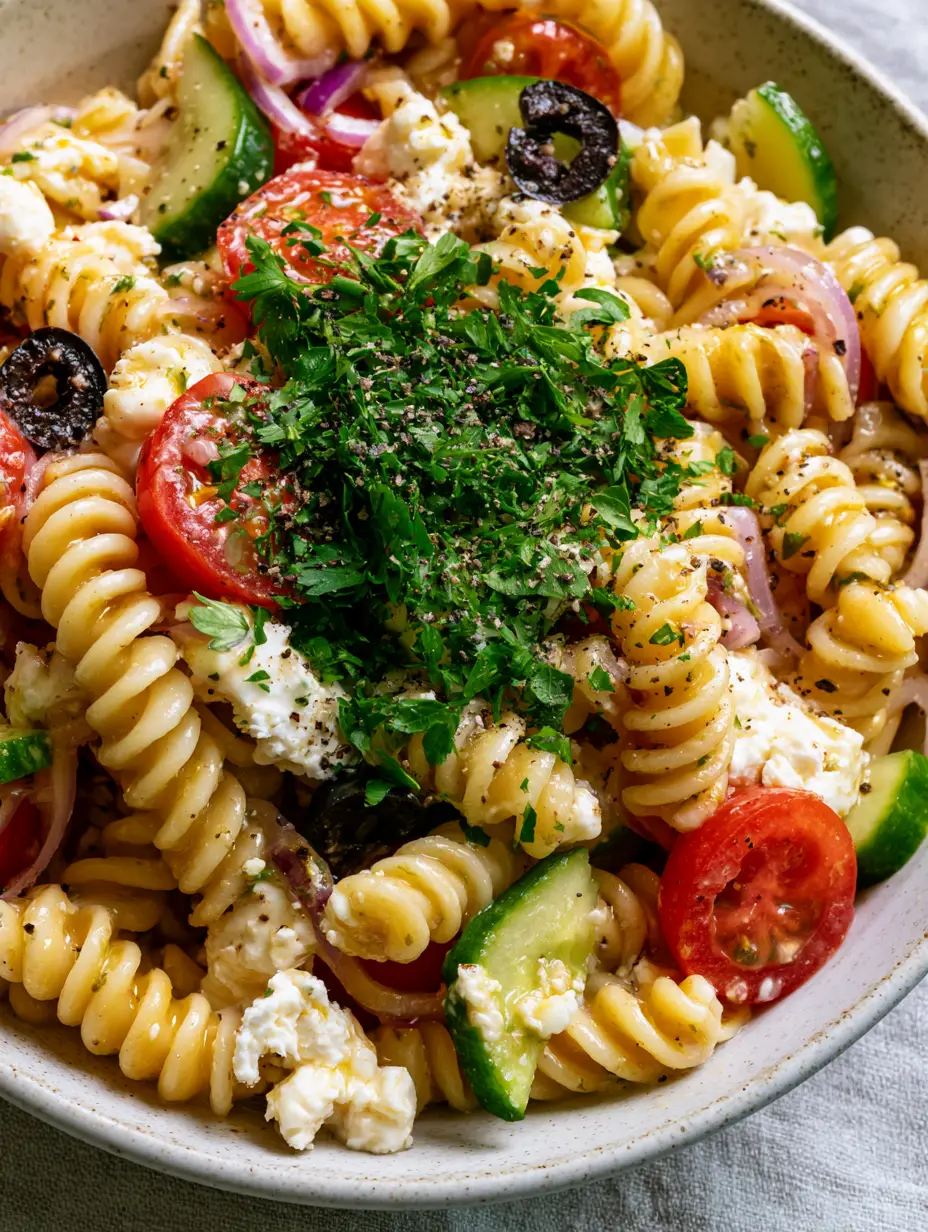
Tangy Pasta Salad with Zest Herb Vinaigrette and Feta
Ingredients
Equipment
Method
- Cook rotini in salted boiling water for 1-2 minutes less than package directions until al dente. Drain and rinse with cold water.
- Combine olive oil, vinegar, Dijon, garlic, and spices in a jar. Shake until emulsified and glossy.
- Toss pasta with vegetables and dressing until glistening. Fold in feta gently.
Notes
Soak red onions in ice water to remove their harsh bite.
Closing & Call to Action
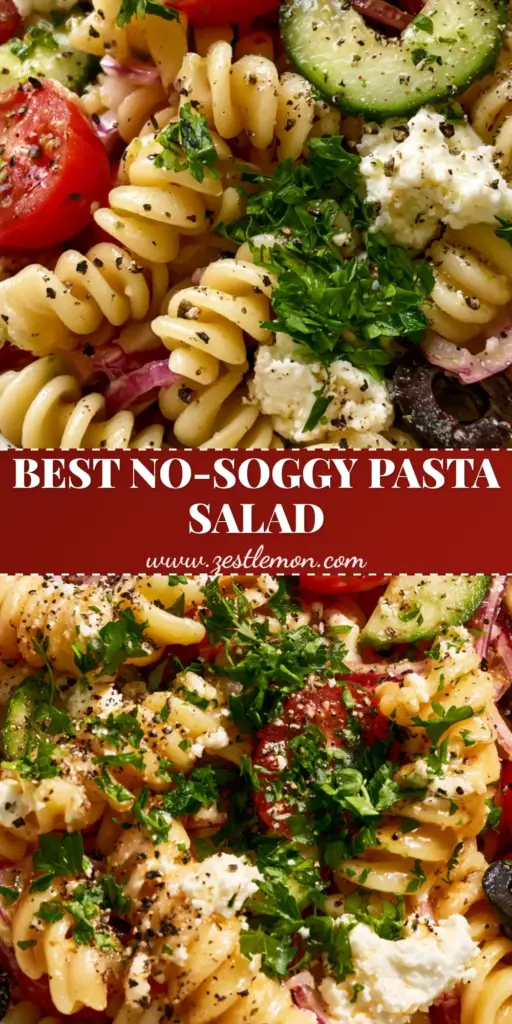
Making a restaurant-quality tangy pasta salad is all about the details—the firm bite of the pasta, the translucency of the dressing, and the freshness of the herbs. We hope this recipe becomes a staple in your kitchen!
Did you make this recipe? We would love to hear how it turned out! Leave a comment below and let us know your favorite vegetable additions. Don’t forget to follow us and share your creations on Pinterest!
For more creative pasta ideas, don’t miss our unique dill pickle bacon pasta salad or the high-energy high protein grinder pasta salad for your post-workout meal prep.