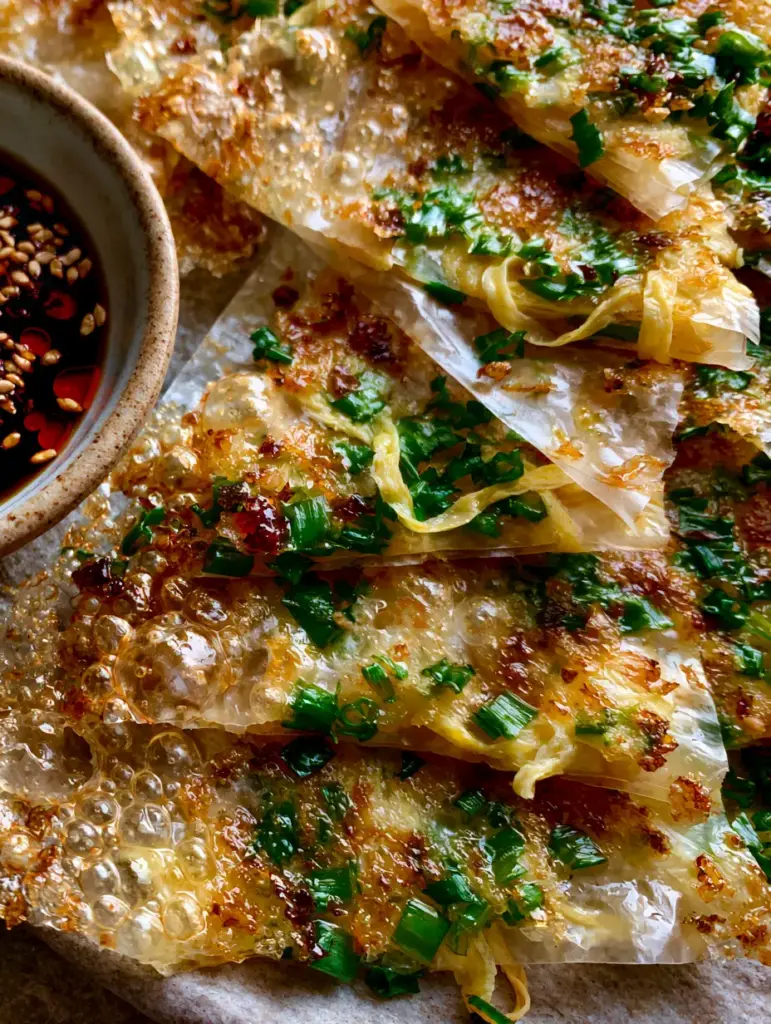
Rice Paper Scallion Pancakes are the viral culinary innovation you didn’t know your kitchen was missing. Combining the shattering, translucent bubbled texture of Vietnamese street food with the savory, aromatic depth of a traditional Chinese scallion pancake, this dish is a sensory masterpiece. Imagine a stack of ultra-thin, golden-brown charred edges that crackle upon impact, revealing layers of bright green scallions and delicate egg ribbons inside.
For those who crave the flavors of a classic dim sum favorite but want a lighter, gluten-free alternative, this recipe is a revelation. The secret lies in the forensic precision of layering rice paper with a thin whisked egg wash, creating a multi-dimensional crunch that stays crispy far longer than traditional dough-based versions. With a glistening toasted sesame oil sheen and a side of spicy soy-ginger dipping sauce, this is destined to become your new favorite 10-minute obsession.
Why These Shatter-Crisp Pancakes Are a Culinary Game Changer
- Unrivaled Texture: The rice paper transforms in the pan, creating a translucent bubbled texture that is light yet incredibly sturdy.
- Visual Brilliance: Between the golden-brown charred edges and the vibrant green of finely chopped fresh scallions, this dish is a feast for the eyes.
- Effortless Speed: Unlike traditional pancakes that require kneading and resting, these utilize pantry staples for a result that tastes like hours of labor.
- The “Shatter” Factor: The combination of high-heat searing and rice starch creates a crystalline structure that shatters satisfyingly with every bite.
Anatomy of the Perfect Rice Paper Scallion Pancakes Ingredient List
Achieving that specific oily sheen and bubbled surface requires a balance of high-quality fats and fresh aromatics. Each ingredient in this list serves a specific structural or flavor-enhancing purpose to ensure your final result matches the visual blueprint of professional-grade street food.
Spring Rice Paper Wrappers: You will need 2 sheets per pancake. These provide the essential rice starch base that, when fried, creates the iconic translucent and bubbled texture described in our visual guide.
Large Eggs: 1 egg (50g) per pancake. The egg acts as a culinary bridge, binding the rice paper layers together while providing those characteristic thin egg ribbons that peek through the translucent layers.
Fresh Scallions: 1/2 cup (50g) finely chopped. Use both the white and green parts to ensure a sharp, aromatic bite and a beautiful visual contrast against the golden-brown charred edges.
Toasted Sesame Oil: 1 tbsp (15ml) for finishing. This provides the signature glistening sesame oil sheen and a deep, nutty aroma that rounds out the savory profile.
Neutral Frying Oil: 2 tbsp (30ml) grapeseed or avocado oil. A high-smoke point oil is scientifically required to achieve the Maillard reaction responsible for those deep golden-brown highlights without burning the delicate rice paper.
White Sesame Seeds: 1 tsp (3g). These add a final layer of micro-crunch and visual detail, adhering to the glistening surface of the finished pancake.
The Soy-Ginger Dipping Sauce: A blend of 2 tbsp (30ml) soy sauce, 1 tsp (5g) grated ginger, and 1 tsp (5ml) red chili oil flakes. This sauce provides the acidic and spicy counterpoint needed to cut through the richness of the fried layers.
Essential Equipment for Mastering the Sear
To replicate the high-resolution, macro-style results of our visual blueprint, you need tools that facilitate even heat distribution and easy flipping. A heavy-bottomed non-stick skillet or a seasoned cast-iron pan is non-negotiable for achieving that specific shatter-crisp texture.
You will also need a wide offset spatula to flip the pancakes without tearing the delicate, bubbling rice paper. A sharp chef’s knife is essential for achieving the “finely chopped” scallion requirement, ensuring the aromatics are distributed evenly between the layers rather than clumping.
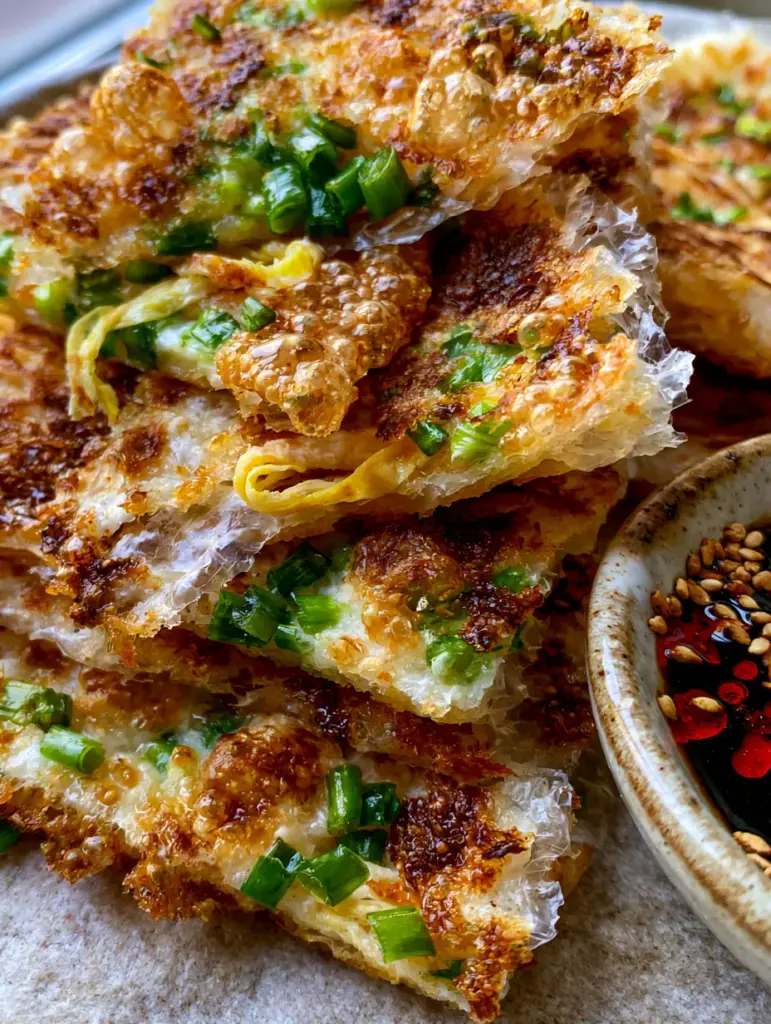
Step-by-Step Guide to Achieving the Translucent Bubbled Texture
Preparing the Scallion and Egg Base
Begin by finely chopping your fresh scallions. In a small bowl, whisk one egg with a pinch of sea salt and a drop of toasted sesame oil. The goal here is a thin, homogeneous whisked egg wash that will spread easily across the surface of the rice paper without creating heavy, thick patches.
The Cold-Start Assembly Technique
Place one dry rice paper sheet into a cold, lightly oiled non-stick skillet. Pour half of your whisked egg wash onto the center and use the back of a spoon to spread it to the very edges. Sprinkle a generous handful of scallions and a pinch of red chili oil flakes over the egg, then top with the second rice paper sheet, pressing down firmly to seal the “sandwich.”
Executing the High-Heat Sear
Turn the heat to medium-high. As the pan warms, you will hear a faint crackling sound—this is the moisture in the egg hydrating the rice paper. Watch for the visual cue of the bottom layer becoming translucent and forming small, crystalline bubbles. Once the edges begin to turn a deep golden-brown, use your spatula to flip the pancake in one confident motion.
Finishing with the Signature Sheen
Sear the second side for an additional 2 minutes until it mirrors the first. Just before removing from the heat, brush the surface with a thin layer of toasted sesame oil. This creates the oily sheen highlighted in our visual blueprint. Sprinkle with white sesame seeds while the oil is still hot so they adhere perfectly to the shattered crispy scallion pancakes.
Expert Tips for Success and Troubleshooting
- Avoid Over-Soaking: Unlike when making spring rolls, do not dip the rice paper in water beforehand. The moisture from the egg wash is perfectly sufficient to hydrate the paper while maintaining the ability to become shatter-crisp.
- Heat Control: If your pancakes are browning too quickly without bubbling, lower the heat slightly. The translucent bubbled texture requires a steady rise in temperature to trap air between the layers.
- The Double-Layer Rule: Always use two sheets of rice paper. A single sheet is too fragile to support the egg ribbons and scallions, often resulting in a chewy rather than crispy texture.
- Serving Immediately: These pancakes are at their peak “shatter” level within 5 minutes of leaving the pan. If you are making a large batch, keep them in a warm oven on a wire rack to maintain airflow.
Strategic Pairings for a Complete Asian-Inspired Feast
Rice Paper Scallion Pancakes are versatile enough to stand alone as a snack, but they truly shine when paired with complementary textures and flavors. For a balanced lunch, serve these alongside our refreshing cucumber salad recipes to provide a cool, acidic contrast to the fried rice paper.
If you are looking for a more substantial meal, these pancakes make an excellent side dish for savory salmon rice bowls or a hearty chicken zucchini stir fry. The shatter-crisp texture of the pancakes acts as a perfect vehicle for soaking up extra sauce from these quick recipes. For those following a plant-based diet, these pancakes are a staple in many vegetarische rezepte (vegetarian recipes) across Southeast Asia.
Storage, Reheating, and Texture Preservation
While these are best enjoyed fresh, you can store leftovers in an airtight container in the refrigerator for up to 2 days. To revive the shattered crispy texture, avoid the microwave at all costs—it will turn the rice paper rubbery.
Instead, reheat the pancakes in a dry skillet over medium heat for 2-3 minutes per side. Alternatively, an air fryer set to 350°F (175°C) for 4 minutes will restore the golden-brown charred edges and the translucent bubbled texture to nearly their original glory.
Frequently Asked Questions
Yes! You can replace the egg wash with a thin slurry of cornstarch and water or a commercial plant-based egg substitute to achieve a similar binding effect and crispy texture.
No, do not soak the rice paper. The moisture from the whisked egg wash and the scallions is enough to hydrate the starch so it bubbles and crisps perfectly in the pan.
For the best results, use an air fryer at 350°F (175°C) for 3-4 minutes or a dry skillet over medium heat. Avoid the microwave, as it will make the rice paper tough and rubbery.
Chewiness usually results from using too much egg wash or not frying at a high enough temperature. Ensure your pan is at medium-high heat and use only enough egg to lightly coat the paper.
The Ultimate Rice Paper Scallion Pancakes Recipe
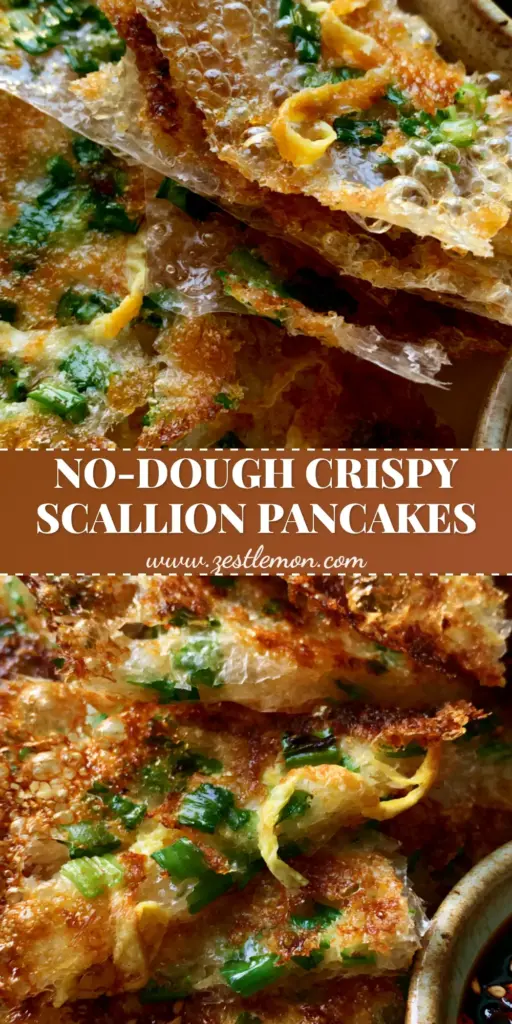
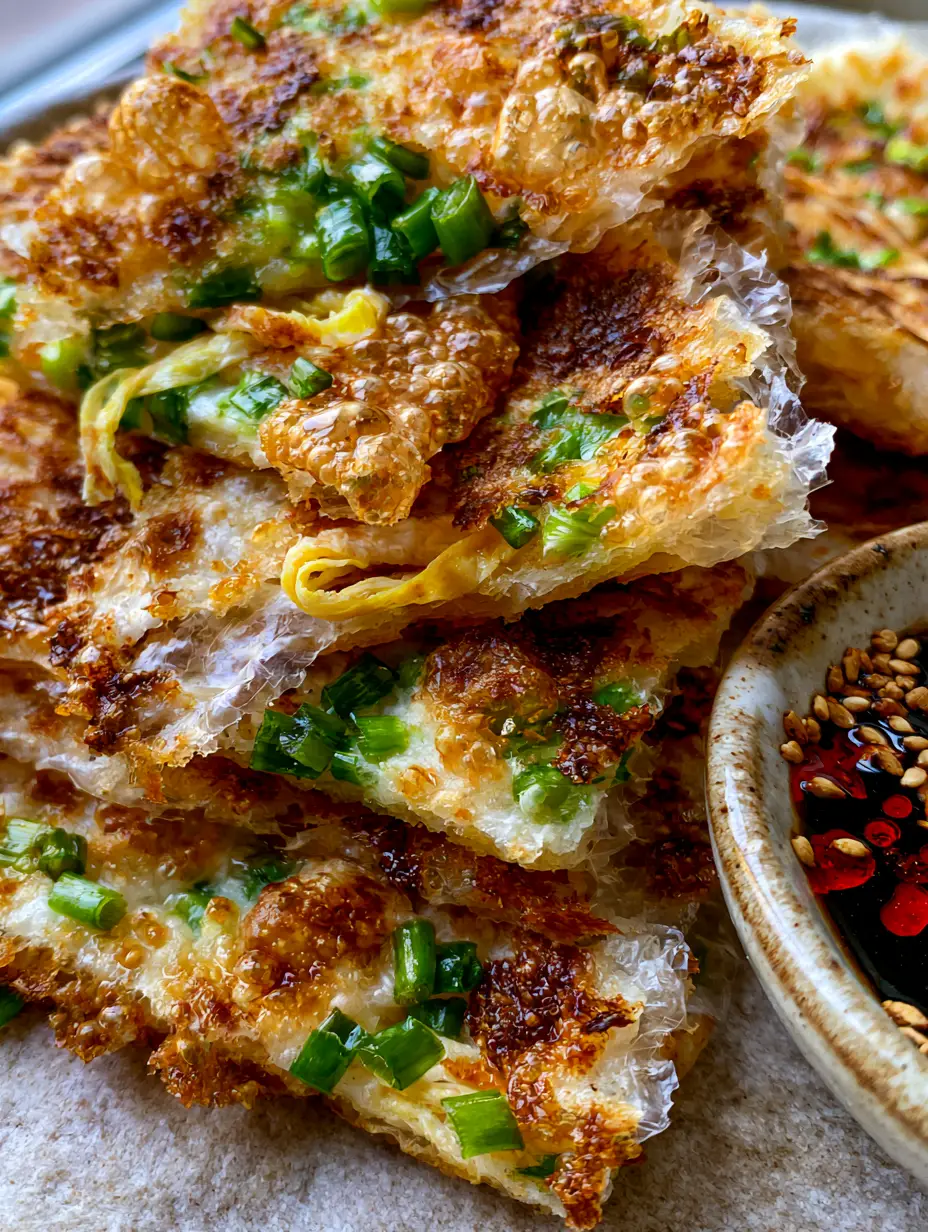
Rice Paper Scallion Pancakes: The Ultimate Shatter-Crisp Shortcut
Ingredients
Equipment
Method
- Finely chop the scallions and whisk the eggs in a small bowl with a pinch of salt until no streaks remain.
- Place one dry rice paper sheet in a cold, lightly oiled pan. Spread half the egg wash and scallions over the sheet, then top with a second rice paper sheet.
- Turn heat to medium-high. Fry for 2-3 minutes until the bottom is golden-brown and the rice paper develops a translucent bubbled texture.
- Flip the pancake. Sear for 2 more minutes. Brush with toasted sesame oil for a glistening sheen and sprinkle with white sesame seeds.
Notes
Serve immediately to maintain the shatter-crisp texture.
Final Thoughts on Mastering This Crispy Classic
Mastering Rice Paper Scallion Pancakes is about embracing the sensory cues of the kitchen—the sound of the crackle, the sight of the bubbles, and the aroma of toasted sesame oil. This recipe proves that you don’t need complex doughs to achieve world-class textures. Whether you’re looking for a fast weeknight appetizer or a stunning weekend brunch addition, these pancakes deliver every time.
If you enjoyed this recipe, please leave a comment below and let us know how your shatter-crisp layers turned out! Don’t forget to follow us on Pinterest for more visually stunning and delicious meal inspiration. Happy cooking!